
The OTC Hair Loss Guide: Evaluating Serums, Supplements, Lasers, and Shampoos
Over-the-counter hair growth products, including nutritional supplements, topical serums, and at-home laser devices, can support existing hair quality and reduce minor shedding. However, retail solutions have a clinical ceiling as neither advanced follicle miniaturization nor androgenetic alopecia can be treated without medical-grade or surgical intervention.
Key Takeaways
The Cosmetic-Clinical Divide: Retail products are legally classified as cosmetics, meaning they are designed to improve appearance (plumping, shine, oil control) rather than alter human biology. Only FDA-approved pharmaceutical agents can biologically block Dihydrotestosterone (DHT) or force dormant follicles into the active growth phase.
The Product Ceiling: Supplements (like Biotin) only correct rare nutritional deficiencies, and topical serums fail to penetrate the stratum corneum to reach the hair bulb. While these products can help manage stress-induced thinning (Telogen Effluvium), they are ineffective against progressive genetic balding.
Device Efficacy Requires Living Tissue: At-home technologies like Low-Level Laser Therapy (LLLT) and microneedling can stimulate cellular energy (ATP) in weak, thinning follicles, but they are powerless against follicles that have completely atrophied into scar tissue. Surgical hair restoration is the only solution for dormant areas.
Table of Contents
Chapter 1: Navigating the Over-the-Counter Hair Growth Market
Chapter 2: Deep Dive into Hair Growth Supplements
Chapter 3: Topical Serums, Shampoos, and Scalp Treatments
Chapter 4: At-Home Hair Growth Technology
Chapter 5: Knowing When Your At-Home Routine Has Failed
Frequently Asked Questions
Chapter 1: Navigating the Over-the-Counter Hair Growth Market
Why the Hair Loss Industry is Flooded with Retail Claims
Hair loss is a deeply personal, often emotionally taxing experience that strikes at the core of human identity and self-confidence. The multi-billion-dollar hair loss industry thrives on this psychological urgency. When a patient first notices their hairline receding in the mirror or their part widening under harsh bathroom lighting, the immediate, panicked instinct is to find a "natural," accessible, or "easy" solution at the grocery store or online. This immense psychological pressure creates a massive, highly profitable market for products that promise regrowth but deliver, at best, cosmetic improvements in thickness.
To make informed decisions and stop wasting capital on ineffective treatments, patients must understand the fundamental regulatory distinction between the two categories of products sold in the United States.
The Legal Distinction: Cosmetics vs. Drugs
The Food and Drug Administration (FDA) enforces strict legal definitions that separate retail hair products from true medical interventions. Understanding this divide is the first step in recognizing the limits of OTC solutions.
Cosmetic Products: By legal definition, cosmetics are formulated to "cleanse, beautify, promote attractiveness, or alter the appearance." Crucially, they are legally prohibited from claiming to affect the structure or function of the human body. The vast majority of OTC shampoos, essential oil blends, botanical extracts, and thickening serums fall squarely into this category. They can manipulate the hair you already have, making it appear shinier, temporarily swelling the hair shaft to look thicker, or stripping away heavy oils that weigh the hair down, but they physically cannot stop the underlying disease process of androgenetic alopecia.
Pharmaceutical Drugs: Drugs are defined as articles intended for use in the "diagnosis, cure, mitigation, treatment, or prevention of disease," or articles intended to "affect the structure or any function of the body." Only highly specific, FDA-approved medications (such as oral Finasteride or topical Minoxidil) meet this definition for hair loss because they have been proven in rigorous, double-blind clinical trials to actively alter follicular biology.
When you purchase a retail thickening serum or a botanical shampoo, you are buying a cosmetic aid, not necessarily a cure. If your hair loss is driven by genetics and hormones, you will likely require physiological intervention. Using a cosmetic product to treat a genetic disease is the biological equivalent of using makeup to treat a systemic skin infection, it might temporarily mask the visual symptoms, but it does absolutely nothing to halt the underlying cause.
The Sunk-Cost Fallacy of Hair Loss
The most insidious aspect of the OTC market is the "sunk-cost fallacy:" A consumer buys a $50 thickening shampoo, sees no real regrowth after three months, but then assumes they simply need to add a $100 serum or a $50 monthly vitamin subscription to the routine. Months turn into years, and thousands of dollars are spent on cosmetic ecosystems while the actual root cause of the hair loss, typically Dihydrotestosterone (DHT) binding to the androgen receptors of the follicle, is left completely unchecked. During this time, the follicles undergo progressive miniaturization, eventually scarring over and dying completely.
Chapter 2: Deep Dive into Hair Growth Supplements
Nutritional Therapy: Separate the Science from the Marketing
Walk down any pharmacy aisle and you will be confronted by a wall of hair growth gummies, capsules, and drink powders. The dietary supplement market is currently dominated by complex, high-priced products that utilize sophisticated marketing targeting the stress-related nature of modern hair loss. But what is actually happening at the cellular level when you ingest these supplements?
Premium Supplement Ecosystems (Nutrafol, Viviscal, etc.)
Brands like Nutrafol and Viviscal have gained massive mainstream traction. Instead of relying on a single ingredient, these "nutraceuticals" utilize proprietary blends of marine complexes (often derived from shark cartilage or mollusk powder), adaptogenic herbs (like Ashwagandha and Maca root), saw palmetto, and antioxidants.
The Clinical Reality: To evaluate these supplements fairly, we must separate two entirely different types of hair loss: Telogen Effluvium and Androgenetic Alopecia.
These premium supplements can be highly effective for patients experiencing Telogen Effluvium, a form of temporary hair loss triggered by physical or severe psychological stress, illness, rapid weight loss, or postpartum hormonal shifts. By providing the body with a surplus of micronutrients, amino acids, and adaptogens that help regulate cortisol (the body's primary stress hormone), these supplements create an optimized internal environment. They support the scalp through its natural recovery period, helping shocked follicles transition back into the Anagen (growth) phase.
However, these supplements fall significantly short when faced with Androgenetic Alopecia (genetic pattern baldness). Genetic hair loss is not caused by stress, a poor diet, or a lack of marine collagen; it is caused by a localized genetic sensitivity to DHT. While some supplements contain Saw Palmetto, a botanical extract that has shown very mild ability to inhibit the 5-alpha-reductase enzyme that creates DHT, the concentration and bioavailability are nowhere near strong enough to stop aggressive genetic thinning. They support the "soil" (overall scalp health), but they cannot stop the "weeds" (DHT-induced miniaturization) from destroying the follicles.
The Biotin Fallacy: A Historical Misunderstanding
Perhaps no single ingredient is more misunderstood, heavily marketed, and clinically over-prescribed than Biotin (Vitamin B7). It is the absolute cornerstone of almost every hair, skin, and nail supplement currently on the market.
The logic sold to consumers is dangerously simple: human hair is primarily constructed of a protein called keratin, and biotin plays a role in the body's keratin infrastructure, therefore, consuming massive daily doses of biotin will result in rapid, thick hair growth.

The Clinical Truth: Biotin deficiency is exceedingly rare in healthy populations living in developed nations.[1] Unless you suffer from a specific genetic metabolic disorder (like biotinidase deficiency), suffer from severe alcoholism, or are pregnant, your body is already absorbing all the biotin it requires from a standard diet of eggs, nuts, seeds, and meats.
Because biotin is a water-soluble vitamin, your body cannot store a surplus of it. If you take a supplement containing 10,000 mcg of biotin (thousands of times the recommended daily value), your body will simply flush the excess. Consuming megadoses of biotin will not speed up hair growth, increase the diameter of your hair shaft, or stop genetic balding.
Furthermore, excessive biotin intake is not just useless; it can be medically dangerous. The FDA has issued explicit warnings that high levels of circulating biotin in the bloodstream can severely interfere with critical diagnostic lab tests, most notably cardiac troponin levels used to diagnose heart attacks, and thyroid hormone tests. This can lead to fatal diagnostic errors in emergency medical situations.
Chapter 3: Topical Serums, Shampoos, and Scalp Treatments
Do Topical Retail Treatments Work?
If you are currently using a store-bought thickening system, you are in the majority. These topical products are incredibly popular because they offer immediate, tactile gratification. When you wash your hair and it instantly feels fuller, it provides a powerful psychological boost. But we must examine what is happening to the hair strand versus what is happening beneath the scalp.
Thickening Shampoos and Scalp Rinses
Systems like Nioxin, or various "caffeine-infused" thickening shampoos, are designed with a dual-focus: optimizing the surface environment of the scalp and maximizing visual volume.
These systems are excellent at clearing excess sebum (scalp oil), dead skin cells, and product buildup from the epidermal surface using chemical exfoliants like salicylic acid. A clean scalp is undoubtedly a healthier environment for hair growth, as severe buildup can lead to folliculitis or seborrheic dermatitis. Furthermore, these products utilize advanced, positively-charged synthetic polymers and proteins. Because damaged thinning hair often carries a negative ionic charge, these polymers bind directly to the outside of the hair shaft, artificially swelling the cuticle and making each individual strand appear physically thicker.
The Reality: These products are superb at optimizing the illusion of density. However, because they are rinse-off products, they have virtually zero contact time with the scalp. Even if the shampoo contains caffeine, peppermint oil, or botanical stimulants, the concentration is low, and the exposure time (two to three minutes in the shower) is insufficient to alter the biological function of the follicle and thus do nothing to regrow hair from follicles that have stopped producing strands.
OTC Minoxidil (Rogaine): The Exception to the Rule
It is important to note the one major exception in the OTC topical aisle: Minoxidil (commonly sold as Rogaine in 2% or 5% solutions). Originally a prescription medication, it is now available over-the-counter. Minoxidil is an FDA-approved drug, not a cosmetic. It acts as a powerful vasodilator and a potassium channel opener, biologically forcing dormant follicles out of the Telogen phase and extending their active growth phase.
However, even OTC Minoxidil has a clinical ceiling as it does not block DHT. If used alone without a 5-alpha-reductase inhibitor, the genetic miniaturization process will eventually overpower the stimulatory effects of Minoxidil.
Cosmetic Serums and The 500 Dalton Rule
Outside of Minoxidil, the retail serum market is crowded with high-end, expensive formulations boasting proprietary peptide blends, plant stem cells, and amino acids.
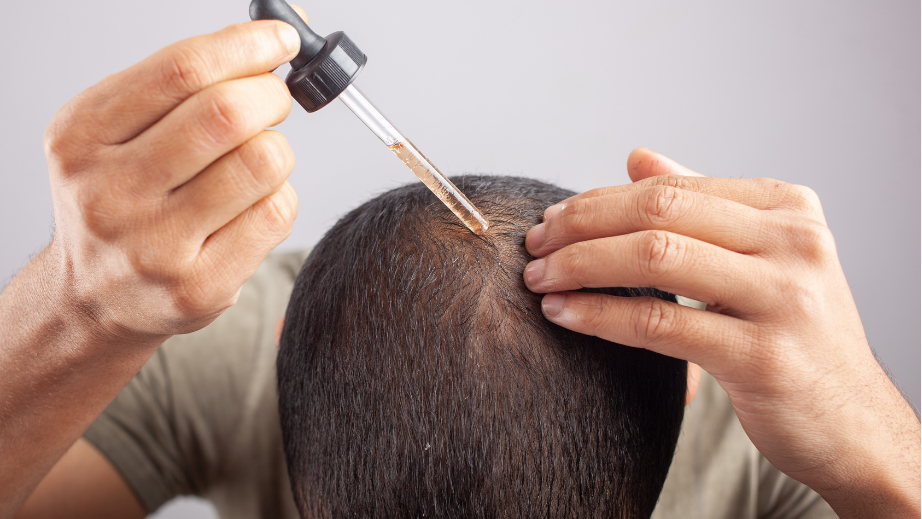
The biological hurdle these serums fail to clear is known in dermatology as the 500 Dalton Rule. For any topical agent to successfully pass through the stratum corneum, the highly protective, waterproof outer barrier of human skin, and reach the deep dermal layer where the hair bulb resides, the molecule must be under 500 Daltons in molecular weight.[2]
Most complex peptides, collagen-boosters, and botanical proteins used in OTC serums are massive, heavy molecules often ranging from 1,000 to 5,000 Daltons, meaning they physically cannot penetrate the skin barrier. Instead, they sit on the surface of the scalp, providing temporary surface hydration, but never reach the follicle to enact change. Only prescription-strength compounded therapies, which utilize specialized, medical-grade delivery vehicles like liposomes to bypass this barrier, can effectively deliver active ingredients directly to the hair bulb.
Chapter 4: At-Home Hair Growth Technology
Evaluating Laser Caps and Micro-Infusion Devices
In recent years, the hair loss industry has seen a massive influx of at-home technology, bringing clinical concepts into the consumer's living room. However, the power levels, calibration, and clinical oversight vary wildly between these consumer-grade devices and professional medical equipment.
Low-Level Laser Therapy (LLLT)
Low-Level Laser Therapy utilizes a biological process known as photobiomodulation. High-quality devices use specific wavelengths of visible red light (typically tightly calibrated in the 650nm to 655nm range). When this specific spectrum of light penetrates the scalp tissue, it is absorbed within the mitochondria of the follicular cells.
This absorption stimulates the production of Adenosine Triphosphate (ATP), which acts as the core "battery" for the cell. By increasing ATP production, LLLT provides the weak, miniaturizing follicle with the cellular energy required to extend the Anagen (growth) phase, reduce localized inflammation, and encourage the production of a thicker, healthier terminal hair shaft.[3]
The Clinical Ceiling: LLLT is a legitimate, evidence-based therapy, but its efficacy is limited to early-to-moderate stages of thinning. The fundamental requirement for LLLT to work is the presence of living, active, mitochondrial tissue. If you are attempting to use a CapillusRX or similar device on a scalp that is smooth and shiny, indicating that the follicles have permanently closed over and atrophied into scar tissue, you will see little to no results. Lasers cannot resurrect dead tissue as they can only stimulate living tissue.
At-Home Microneedling and Micro-Infusion Rollers
Microneedling (also known as collagen induction therapy) involves using hundreds of tiny needles to create controlled micro-injuries in the scalp. This micro-trauma triggers the body's natural wound-healing cascade, stimulating the production of collagen, increasing localized blood flow, and releasing powerful stem cells and growth factors (like PDGF and VEGF). It is also used to vastly increase the transdermal absorption of topical medications like Minoxidil.
The Reality: While clinical microneedling performed by a medical professional in a sterile environment can be effective, at-home dermal rollers are fraught with severe risks.
First, consumers often purchase cheap rollers with needles that are too long (1.5mm or deeper) and use them with too much pressure. Instead of stimulating the follicle, they slice through it, causing dermal fibrosis (scarring) that permanently destroys the hair follicle. Secondly, the lack of clinical-grade sterilization often leads to severe bacterial scalp infections. Finally, without the application of high-quality, sterile clinical serums immediately following the procedure, the intended benefits of the micro-injuries are significantly diminished. What begins as a DIY attempt to save money may result in permanent, irreversible damage to the scalp.
Another thing to note, many store-bought commercial rollers are on .25mm or less in length, as any product exceeding this length is considered a medical device. While less likely to cause damage, the more superficial penetration of these devices do little more than enhance the absorption of skincare products.
Chapter 5: Knowing When Your At-Home Routine Has Failed
The "Product Ceiling": Recognizing the Limits of Self-Treatment
The most dangerous aspect of relying on OTC retail products is not the financial cost; it is the opportunity cost of time. Hair loss is a progressive, persistent biological process. Every month spent cycling through the latest "viral" serum or daily supplement is a month in which DHT is allowed to silently miniaturize your hair follicles toward permanent dormancy.
Once a follicle is completely miniaturized and the tissue has scarred over, no shampoo, laser cap, or vitamin can bring it back to life.
Transitioning to a Permanent, Proven Solution
If you have been using OTC supplements, laser caps, or topical serums for six months with no noticeable regrowth in your thinning areas, you may have hit your product ceiling. Continuing the same daily routine will likely not yield different results, only drain your wallet while your hairline continues to recede.
The transition to a real solution involves moving away from temporary retail cosmetics and seeking a definitive clinical evaluation. At Advanced Hair Restoration, our national network of expert surgeons and restoration specialists focuses exclusively on the one universally proven method for restoring hair: permanent hair transplantation.
Our medical process involves:
Diagnostic Consultation: A comprehensive scalp analysis by our specialized medical team to determine exactly which follicles are merely thinning and which are permanently dormant using medical data, not guesswork.
Surgical Strategy: Through our expertise in state-of-the-art Follicular Unit Extraction (FUE) and Follicular Unit Transplantation (FUT) techniques, we map out a precise surgical plan tailored to your specific facial framing and density goals.
Permanent Restoration: We meticulously extract DHT-resistant follicles from the “donor area" at the back of your head and surgically relocate them to your balding areas. Because these transplanted hairs retain their genetic resistance to thinning, they will continue to grow naturally for the rest of your life. They can be cut, styled, and washed just like the rest of your hair because they are your hair.

A simple, one-day treatment with universally proven methods may be all you need to get your hair back. You do not have to settle for the clinical limitations and diminishing returns of over-the-counter products or gamble your hair's future on unproven daily routines and expensive cosmetic ecosystems. Contact Advanced Hair Restoration today to schedule your specialized hair loss consultation, and take definitive action with a permanent, natural-looking hair transplant.
Frequently Asked Questions
What is the single best supplement to grow hair if you have genetic thinning? There is no nutritional supplement on earth that can cure or stop genetic pattern baldness. While premium supplements containing saw palmetto or marine extracts can support overall hair vitality and reduce stress-related shedding, they must be paired with clinical, FDA-approved DHT-blockers to effectively combat the genetic miniaturization process.
Does Nioxin actually regrow hair or just make it look thicker? Nioxin does not regrow hair, nor does it reactivate dormant hair follicles. It is an excellent scalp-health system that removes follicle-clogging debris and utilizes specialized synthetic polymers to coat existing hair strands. This physically swells the hair cuticle, making your current hair look and feel significantly thicker, but it provides purely cosmetic volume.
Do home laser caps really work for severe hair loss? No. Low-Level Laser Therapy (LLLT) only works on active, thinning follicles by boosting their cellular ATP energy. If an area of the scalp is completely bald, slick, or has been smooth for several years, laser caps cannot resurrect those dead follicles. Once the tissue has scarred over, a surgical hair transplant is the only medically viable option to restore density to that specific area.
Clinical References
Bistas, K. G., & Tadi, P. (2023). Biotin. In StatPearls. StatPearls Publishing. URL:https://www.ncbi.nlm.nih.gov/books/NBK554493/
Bos, J. D., & Meinardi, M. M. (2000). The 500 Dalton rule for the skin penetration of chemical compounds and drugs and the clinical significance for topical drugs. Experimental Dermatology, 9(3), 165-169. URL:https://pubmed.ncbi.nlm.nih.gov/10839713/
Lanzafame, R. J., Blanche, R. R., Bodian, A. B., Chiacchierini, R. P., Fernandez-Olin, A., & Jimenez, J. J. (2014). The growth of human scalp hair mediated by visible red light laser and LED sources in males: A double-blind, randomized, sham device-controlled, multicenter trial. Lasers in Surgery and Medicine, 46(8), 601-607. URL:https://pubmed.ncbi.nlm.nih.gov/25124438/