
The Complete Guide to Diagnosing Hair Loss: Causes, Types, and Triggers
Hair loss is a complex condition triggered by a variety of factors, including genetics, hormonal shifts, nutritional deficiencies, and extreme stress. To effectively treat shedding or thinning hair, it is critical to first secure a clinical diagnosis to determine whether you are experiencing temporary shedding (telogen effluvium), autoimmune issues, or progressive genetic conditions like androgenetic alopecia.
Key Takeaways
Identify the Pattern Before Treating: Not all hair loss is genetic. Distinguishing between patterned thinning (driven by Dihydrotestosterone or DHT) and diffuse shedding (driven by systemic shock, stress, or diet) is the mandatory first step before investing in any restoration strategy.
Systemic and Environmental Triggers are Reversible: High-volume shedding linked to severe nutritional gaps (like low ferritin or Vitamin D), rapid weight loss medications (GLP-1 agonists), or acute illnesses typically resolves once the underlying biological trigger is corrected.
Diagnostic Precision is Required: Over-the-counter guessing wastes valuable time. A definitive diagnosis requires a specialized clinical evaluation utilizing trichoscopy (microscopic scalp analysis) and comprehensive blood work to rule out underlying medical conditions before pursuing permanent surgical restoration.
Table of Contents
Chapter 1: The Biology of the Hair Shedding Cycle
Chapter 2: Identifying the Primary Types of Hair Loss
Chapter 3: Medical, Dietary, and Environmental Triggers
Chapter 4: Age-Specific Hair Loss Concerns
Chapter 5: The Diagnostic Process
Frequently Asked Questions
Chapter 1: The Biology of the Hair Shedding Cycle
Is My Hair Shedding Normal?
One of the most common reasons patients seek out a hair loss specialist is due to sudden panic after seeing hair accumulated in the shower drain, trapped in a hairbrush, or scattered across their pillowcase. However, before diagnosing a pathological hair loss condition, it is critical to establish the biological baseline of the human scalp.
Seeing hair fall out daily is not inherently a sign of balding; it is a fundamental requirement of human biology. The average human scalp holds roughly 100,000 to 150,000 individual hair follicles. Under normal, healthy conditions, losing 50 to 100 hairs a day is a standard, expected part of the biological cycle. This daily shedding is the byproduct of a continuous, asynchronous regenerative process. Unlike some mammals that shed their coats all at once seasonally, human hair follicles operate independently of one another, ensuring that we maintain a full head of hair at all times.
Pathological hair loss—alopecia—only occurs when this delicate biological rhythm is disrupted, when the rate of shedding drastically outpaces the rate of regrowth, or when the follicles themselves are physically damaged. To understand how these disruptions occur, you must first understand the three primary phases of hair growth.[1]
Understanding the Three Phases of Hair Growth
Every single follicle on your body operates on an independent biological clock governed by complex cellular signaling.
The Anagen Phase (Growth): This is the active, productive phase of the hair follicle. During the Anagen phase, the cells in the dermal papilla (the root of the follicle) divide rapidly, adding structural keratin to the hair shaft and pushing it upward and outward through the scalp. In a healthy individual, approximately 85% to 90% of the hair on the head is in this phase at any given moment. The Anagen phase is incredibly long, lasting anywhere from two to seven years. The genetic duration of your personal Anagen phase dictates the maximum length your hair can organically grow.
The Catagen Phase (Transition): Once the Anagen phase concludes, the follicle receives a biological signal to cease production, entering a brief transitional stage known as Catagen. Lasting roughly two to three weeks, this phase accounts for less than 5% of your total hair. During Catagen, the hair follicle undergoes a programmed cellular contraction (apoptosis). It shrinks to a fraction of its original size and physically detaches from the dermal papilla, cutting the hair shaft off from its primary blood supply and nutrient source. The resulting hair becomes what is known as "club hair."
The Telogen Phase (Resting/Shedding): The final stage of the cycle is the Telogen phase, a dormant resting period that typically lasts around three months. Roughly 10% to 15% of your hair is in this phase. The club hair remains anchored in the superficial layers of the scalp, but it is entirely inactive. Beneath it, deep in the dermis, the stem cells of the follicle are slowly preparing to begin a new Anagen phase. Eventually, the resting hair is released from the scalp (a micro-phase sometimes referred to as Exogen) to make physical room for the new hair strand pushing up from beneath it.
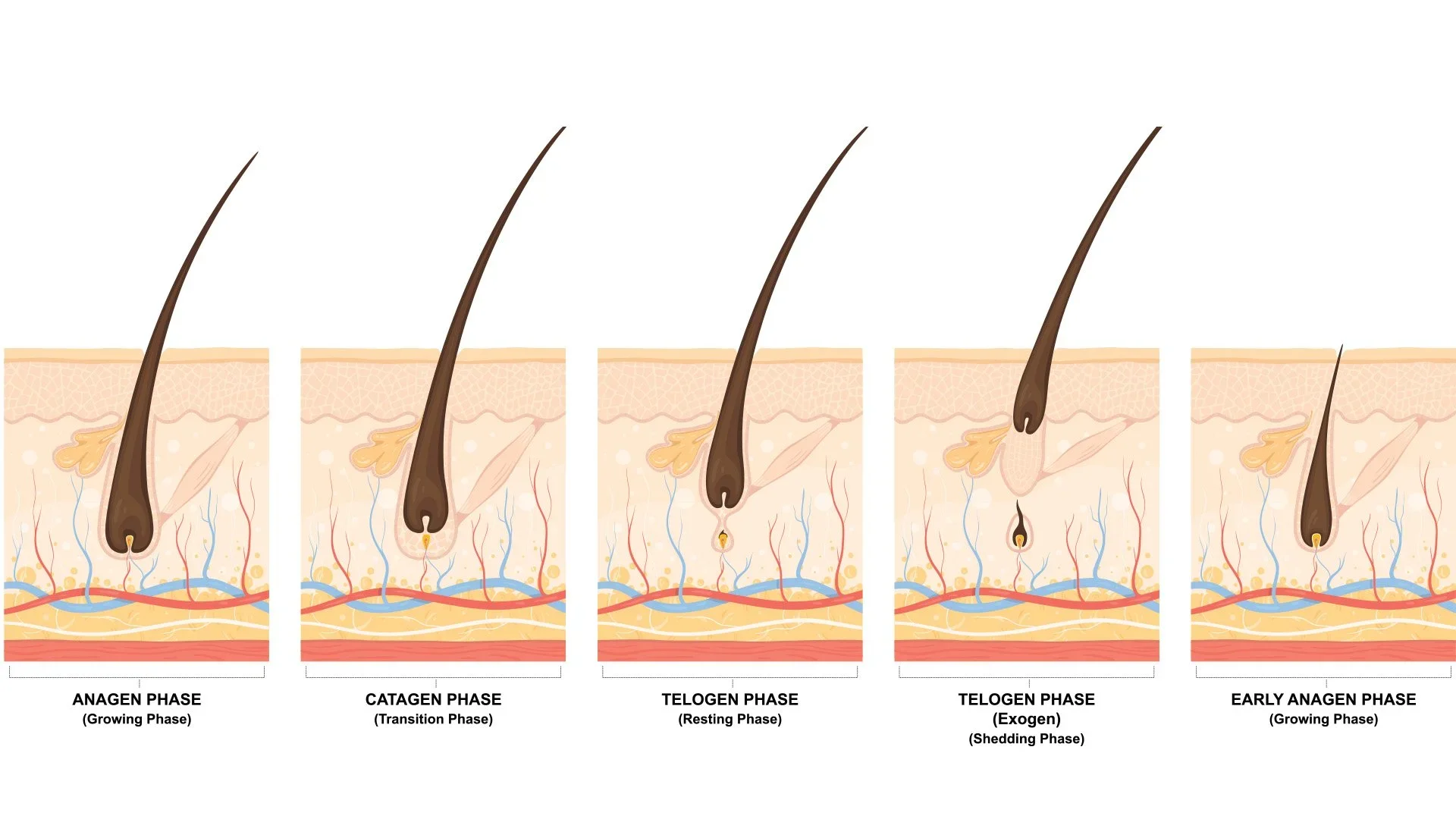
Hair loss occurs when an external trigger, an internal systemic shock, or a genetic predisposition heavily disrupts this cycle. For example, severe stress can artificially force up to 30% of Anagen hairs prematurely into the Telogen phase. Alternatively, hormonal conditions can slowly shorten the Anagen phase year after year until the follicle ceases to produce a visible hair entirely.
Chapter 2: Identifying the Primary Types of Hair Loss
Mapping Your Symptoms to Clinical Conditions
Diagnosing hair loss is not a guessing game; it is a process of clinical deduction. Different pathologies present with highly specific visual patterns, timelines, and physical symptoms. Understanding how your specific hair loss is presenting on the scalp is the key to unlocking the correct medical diagnosis.
Androgenetic Alopecia (Male & Female Pattern Baldness)
Accounting for over 95% of all hair loss cases globally, Androgenetic Alopecia is a strictly genetic, progressive condition driven by hormones. Despite the name, it affects both men and women, though it manifests in vastly different visual patterns.
The biological root cause of pattern baldness is a highly potent androgen hormone called Dihydrotestosterone (DHT). DHT is synthesized in the body when an enzyme known as 5-alpha-reductase interacts with standard circulating testosterone. If you have inherited the genetic predisposition for this condition, the hair follicles located in specific zones on your scalp (the frontal hairline, temples, and crown) possess androgen receptors that are highly sensitive to DHT.
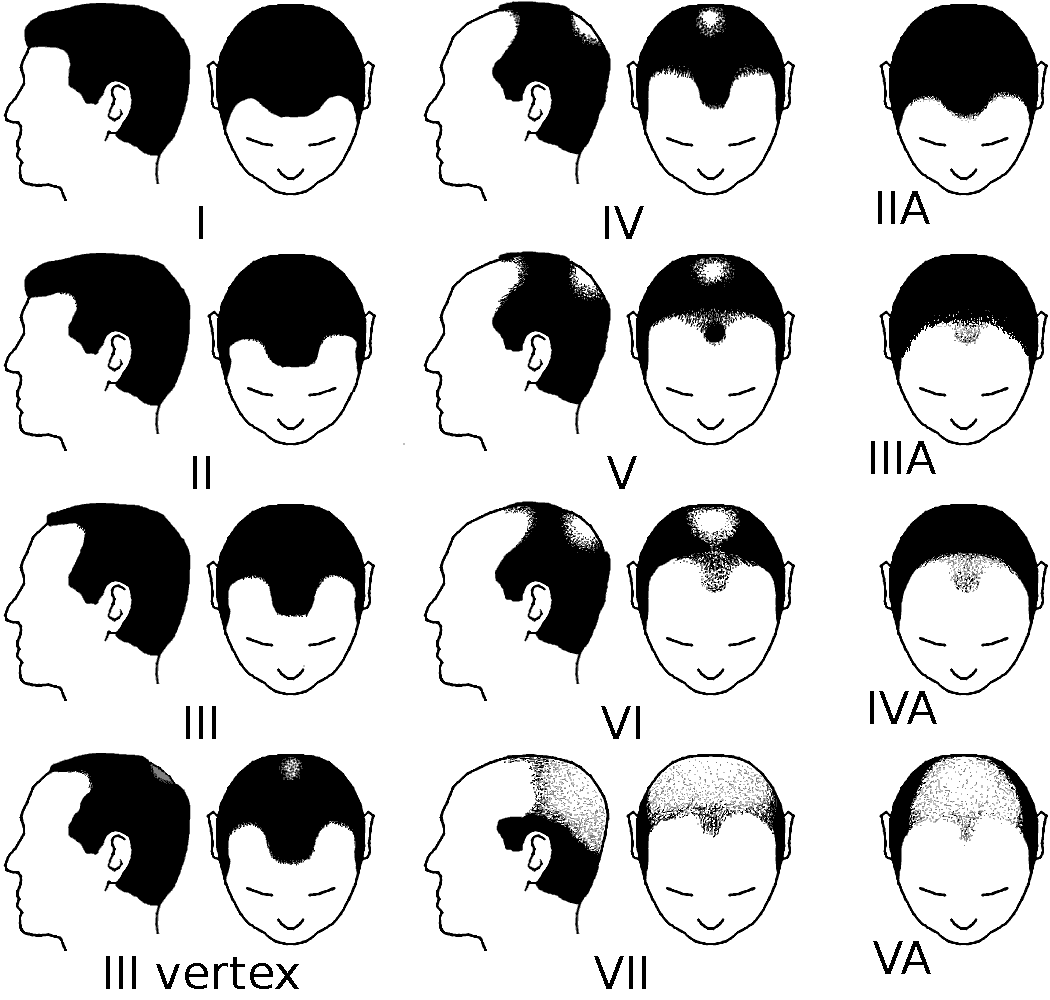
When DHT binds to these specific follicles, it triggers a destructive cascade known as miniaturization. The DHT acts as a slow biological poison, artificially shortening the Anagen (growth) phase while extending the Telogen (resting) phase. Over successive cycles, the hair shaft produced becomes thinner, more translucent, and much weaker. Eventually, the follicle miniaturizes to the point of permanent dormancy, sealing over with scar tissue.[2]
The Male Pattern: Typically measured on the Norwood Scale. It presents as a bilateral recession of the temporal hairline (the classic "M" shape), followed by thinning at the vertex (crown), which eventually expands until the top of the scalp is completely bald, leaving a horseshoe-shaped ring of DHT-immune hair around the sides and back of the head.
The Female Pattern: Typically measured on the Ludwig Scale. Women rarely experience a receding frontal hairline. Instead, female pattern baldness presents as diffuse thinning concentrated centrally across the mid-scalp and crown, most noticeable as a progressively widening part line.
Telogen Effluvium (Stress-Induced Shedding)
If you are experiencing sudden, terrifying amounts of hair falling out in clumps during your shower or when brushing, you are likely experiencing Telogen Effluvium (TE).
Unlike the slow, progressive miniaturization of genetic balding, TE is a reactive, acute condition. It occurs when the body experiences a massive systemic shock. This shock forces the body to conserve energy for critical organ function, and in doing so, it abruptly prematurely forces up to 30% of the scalp's actively growing Anagen hairs directly into the dormant Telogen phase.
Because the Telogen phase lasts approximately three months, the actual hair shedding does not occur until two to three months after the triggering event. This delayed timeline often causes severe confusion for patients, who struggle to connect their current hair fall to a past event.
Common systemic shocks that trigger TE include:
Major surgical procedures or administering of general anesthesia
High, prolonged fevers (such as those associated with severe viral infections)
Severe emotional trauma, grief, or chronic psychological distress
Significant hormonal events, particularly childbirth (often referred to as postpartum alopecia)
The critical diagnostic distinction with Telogen Effluvium is that the follicles themselves are not permanently damaged. Once the underlying stressor is resolved, the body will naturally re-regulate the cycle, and the hair will completely regrow without surgical intervention.[3]
Diffuse Hair Loss (Diffuse Unpatterned Alopecia - DUPA)
Diffuse Unpatterned Alopecia (DUPA) is one of the most challenging forms of hair loss to diagnose and treat. While patterned loss (like male pattern baldness) attacks specific zones and leaves a "safe donor area" at the back of the head, DUPA ignores all patterns.
DUPA is characterized by an overall, global decrease in hair density distributed evenly across the entire scalp. Every single follicle is miniaturizing at an equal rate, including the hairs on the sides and back of the head. Because the entire scalp is affected, patients with DUPA are often not candidates for surgical hair transplantation, as the "donor hairs" at the back of the head are just as weak and prone to falling out as the hairs at the front. Diagnosing DUPA requires high-magnification trichoscopy to map the widespread miniaturization.
Alopecia Areata
Alopecia Areata is an aggressive autoimmune disease, completely unrelated to DHT, stress, or nutrition. In this condition, the body’s own immune system suffers a biological miscommunication and mistakenly identifies the rapidly dividing cells of the Anagen hair bulbs as foreign threats.
A swarm of white blood cells (T-lymphocytes) attacks the base of the hair follicles, rapidly halting hair production. Visually, Alopecia Areata is unmistakable: it presents as completely smooth, round, coin-sized patches of bald skin that can appear overnight. While it most commonly affects the scalp, it can impact any hair-bearing area, including the beard, eyebrows, and eyelashes.
Traction Alopecia
Not all hair loss is driven by internal biology; sometimes, the cause is entirely mechanical. Traction Alopecia is a form of progressive hair loss caused by chronic, localized physical tension applied to the hair shafts over long periods.
Frequent wear of tight ponytails, heavy hair extensions, tight braids, or tightly secured religious headwear puts continuous mechanical strain on the dermal papilla. Over time, this chronic pulling physically tears the follicle from its blood supply and triggers localized inflammation. If the tension is recognized and ceased early, the hair can recover. However, if the pulling continues for years, the follicular matrix suffers permanent fibrosis (scarring), resulting in irreversible hair loss that often requires surgical restoration to correct.
Chapter 3: Medical, Dietary, and Environmental Triggers
What Else Causes Hair to Fall Out?
If a clinical evaluation rules out genetic pattern baldness and autoimmune conditions, the diagnostic focus must shift toward systemic and environmental factors. The human hair follicle is one of the most metabolically active tissues in the body. Because it divides so rapidly, it is incredibly sensitive to subtle changes in the bloodstream, nutritional deficits, and pharmacological interventions.
Nutritional Deficiencies: Iron, Ferritin, and Vitamin D
A poor diet does not cause genetic balding, but severe micronutrient deficiencies can absolutely stall the Anagen growth phase and trigger widespread diffuse shedding.[4]
Iron and Ferritin: This is the most common nutritional trigger for hair loss, particularly in women. Iron is required to produce hemoglobin, the protein in red blood cells that carries oxygen to your tissues, including your hair follicles. Ferritin is the protein that stores iron in the body. If your ferritin levels drop below a critical threshold (often considered to be below 50-70 ng/mL for optimal hair growth, even if still "technically" within a normal medical range), the body prioritizes oxygen delivery to vital organs, starving the hair follicles and triggering shedding.
Vitamin D: Vitamin D is unique because it is metabolized in the body as a hormone. The hair follicle expresses Vitamin D receptors, and adequate levels are required for the creation of new hair follicles and the cycling of existing ones. Severe Vitamin D deficiency (highly common in individuals who work indoors or live in northern latitudes) is heavily linked to disruptions in the Anagen phase.
Zinc and B-Vitamins: While heavily marketed by supplement companies, severe deficiencies in zinc and biotin are rare in developed nations, though they can occur in individuals with severe gastrointestinal malabsorption issues (like Crohn's disease) or highly restrictive vegan diets.
Medication-Induced Shedding and GLP-1 Agonists
Hundreds of widely prescribed medications list alopecia as a potential side effect. These drugs can disrupt the hair cycle through chemical toxicity or by altering hormones.
Common pharmacological triggers include:
GLP-1 Agonists (Semaglutide/Tirzepatide): The massive rise in medications like Ozempic and Wegovy has created a wave of associated hair loss. It is vital to note that the medication itself is not chemically attacking the hair. Rather, the drug causes severe appetite suppression, leading to massive caloric deficits, rapid weight loss, and reduced protein intake. This systemic shock induces severe Telogen Effluvium.
Isotretinoin (Accutane): Used for severe cystic acne, high doses of Vitamin A derivatives can dry out the sebaceous glands to the point where the hair shaft becomes brittle and snaps, while also pushing follicles into the Telogen phase.
Blood Thinners (Anticoagulants): Medications used to prevent blood clots can occasionally trigger widespread, mild shedding.
Thyroid Medications: Both over-active (hyperthyroidism) and under-active (hypothyroidism) thyroid conditions cause hair loss. Paradoxically, the synthetic hormones used to treat these conditions (like Levothyroxine) can also trigger shedding as the body’s metabolic rate adjusts.

Scalp Health, Inflammation, and Lifestyle
The localized environment of the scalp (the microbiome) plays a critical role in hair retention. Chronic, untreated scalp conditions like severe seborrheic dermatitis (severe dandruff) or scalp psoriasis create massive inflammation in the dermal tissue. While the inflammation itself does not kill the follicle, the severe itching causes patients to aggressively scratch their scalps, causing mechanical breakage of the hair shafts and traumatizing the follicles.
Furthermore, lifestyle factors play a cumulative role in hair quality. Smoking acts as a powerful vasoconstrictor, shrinking the tiny micro-capillaries that feed the hair bulbs, literally suffocating them of oxygen. Excessive alcohol consumption dehydrates the body and rapidly depletes vital zinc and B-vitamin stores. Chronic sleep deprivation artificially elevates cortisol levels over long periods, creating a low-level, continuous state of Telogen Effluvium that prevents the hair cycle from fully recovering.
Chapter 4: Age-Specific Hair Loss Concerns
When Does Hair Loss Typically Start?
Hair loss does not respect age brackets. While the general public associates thinning hair with late middle age, the biological reality is far more complex. The age at which your hair loss begins heavily dictates both the psychological impact and the required diagnostic approach.
Navigating Hair Loss in Your 20s vs. Your 50s
For individuals in their early 20s, the onset of hair loss is often highly aggressive. If genetic pattern baldness presents itself shortly after puberty concludes, it indicates an incredibly high follicular sensitivity to DHT. Because younger patients have decades of potential miniaturization ahead of them, aggressive medical management (such as 5-alpha-reductase inhibitors) is often required immediately to preserve the existing hair. The psychosocial impact is also far more severe; losing hair in your 20s can devastate self-esteem and social confidence during foundational adult years.
Conversely, hair loss that begins in a patient's 50s or 60s is often a slower, more cumulative process. For men, genetic loss has usually stabilized, making them excellent candidates for surgical restoration. For women in their 50s, the primary trigger is often the onset of menopause. As estrogen and progesterone levels plummet, the protective effect of these female hormones disappears, allowing previously masked, low-level male androgens (like DHT) to attack the follicles, resulting in widespread thinning across the crown.
Adolescent Hair Loss: Beyond Social Media Trends
Queries regarding adolescent and teen hair loss are rising exponentially. When a teenager begins losing their hair, it is a clinical red flag that requires immense empathy and immediate medical intervention, rather than relying on viral retail serums or holistic oils.
Adolescent hair loss is rarely standard pattern baldness. Instead, it is frequently linked to:
Puberty-Induced Hormonal Changes: Massive, rapid spikes in androgens can prematurely trigger miniaturization in highly genetically susceptible teens.
Severe Nutritional Gaps: Adolescents going through rapid growth spurts require immense caloric and nutritional intake. Eating disorders or highly restrictive crash diets can instantly trigger Telogen Effluvium.
Autoimmune Onset: Alopecia Areata frequently presents for the first time during adolescence, presenting as smooth bald patches that can cause immense distress.
Teenage hair loss warrants seeking a pediatric dermatological evaluation to rule out serious underlying endocrine or autoimmune disorders. Attempting to self-diagnose adolescent shedding is dangerous and wastes critical time.
Chapter 5: The Diagnostic Process
How Specialists Diagnose the Root Cause of Hair Loss
Diagnosing hair loss is a forensic medical process. You cannot determine the viability of a hair follicle by simply looking at it in the bathroom mirror. Efficacious treatment requires hard, clinical data.
At Advanced Hair Restoration, our expert surgeons and highly specialized medical teams utilize rigorous, evidence-based diagnostic protocols to uncover the exact biological root cause of your shedding before any treatment is prescribed. We do not rely on guesswork; we rely on medical science.

The Clinical Scalp Evaluation: Trichoscopy
The cornerstone of a professional hair loss diagnosis is Trichoscopy, a non-invasive, high-magnification surface microscopy of the scalp and hair structures.[5]
Using specialized clinical lenses that magnify the scalp up to 100x, our medical team can visualize the micro-anatomy of your hair follicles. Trichoscopy allows us to:
Measure Hair Caliber: By measuring the exact diameter of the hair shafts in different zones of the scalp, we can definitively prove the presence of DHT-induced miniaturization (the hallmark of genetic balding) versus the uniform thinning seen in Telogen Effluvium.
Assess Follicular Density: We can calculate exactly how many hairs are emerging from a single follicular unit, identifying areas of early depletion before they are visible to the naked eye.
Evaluate Scalp Health: High magnification reveals sub-clinical inflammation, scarring, peripilar signs (halo structures around the pore indicating active disease), and localized vascular abnormalities that point to autoimmune issues.
The Importance of Comprehensive Blood Work
If trichoscopy indicates that your hair loss is not strictly genetic, or if you present with widespread diffuse thinning, you may benefit from highly targeted hematology panels as blood work is the only way to uncover hidden systemic triggers.
A standard diagnostic hair loss panel often includes:
Comprehensive Metabolic Panel (CMP) & Complete Blood Count (CBC): To check for baseline organ function, anemia, and immune response.
Iron Panel & Ferritin: To ensure your iron storage is well above the threshold required for healthy Anagen phase cycling.
Thyroid Panel (TSH, Free T3, Free T4): To rule out undiagnosed hyperthyroidism or hypothyroidism.
Hormone Panels: Checking DHEAS, total/free testosterone, and estradiol to identify severe endocrine imbalances.
Transitioning to a Permanent Solution
Once a definitive clinical diagnosis is secured, the path forward becomes clear. If your diagnosis confirms that your hair loss is caused by genetic Androgenetic Alopecia, and your follicles have completely miniaturized into permanent dormancy, no topical serum, vitamin, or retail shampoo can revive them.
The only medically proven method to restore hair density to areas where the follicles have died is permanent surgical hair transplantation. Our expert surgeons at Advanced Hair Restoration specialize in state-of-the-art Follicular Unit Extraction (FUE) and Follicular Unit Transplantation (FUT) procedures. By meticulously relocating DHT-resistant follicles from the safe donor zone at the back of your head to your balding areas, we provide a completely natural, undetectable, and permanent solution.
Stop attempting to self-diagnose your hair loss with ineffective over-the-counter products. Contact Advanced Hair Restoration today to schedule a comprehensive hair loss consultation with our specialized medical team, and take the first step toward a permanent, proven restoration strategy.
Frequently Asked Questions
Can low iron cause hair loss? Yes. Iron is essential for producing the hemoglobin that carries oxygen to your cells, including your highly metabolically active hair follicles. A severe iron deficiency (specifically low ferritin stores) can disrupt the Anagen hair growth cycle and lead to widespread diffuse thinning. Fortunately, this specific type of hair loss is typically reversible with proper medical supplementation and dietary changes.
Can bad dandruff cause hair loss? Dandruff itself does not biologically cause hair loss. However, severe scratching due to an intensely itchy scalp can physically break the hair shaft and mechanically damage the follicles. Furthermore, severe underlying medical conditions that cause extreme flaking, like seborrheic dermatitis or scalp psoriasis, can heavily inflame the dermal tissue and temporarily disrupt healthy hair growth.
Does rapid weight loss or GLP-1 medication cause hair loss? Rapid, significant weight loss can shock the body’s internal systems, forcing it to conserve energy by prematurely pushing hair follicles into a resting state—a temporary shedding condition called Telogen Effluvium. While GLP-1 weight loss medications (like Ozempic or Wegovy) do not chemically attack hair follicles directly, the severe nutritional deficits, reduced protein intake, and rapid caloric reduction associated with them frequently result in severe, temporary hair shedding.
Clinical References
Natarelli, N., Gahoonia, N., & Sivamani, R. K. (2023). Integrative and Mechanistic Approach to the Hair Growth Cycle and Hair Loss. Journal of Clinical Medicine, 12(3), 893. URL:https://www.ncbi.nlm.nih.gov/pmc/articles/PMC9917549/
Asfour, L., Cranwell, W., & Sinclair, R. (2016). Male Androgenetic Alopecia. In Endotext. MDText.com, Inc. URL:https://www.ncbi.nlm.nih.gov/books/NBK278957/
Harrison, S., & Sinclair, R. (2002). Telogen effluvium. Clinical and Experimental Dermatology, 27(5), 389-395. URL:https://pubmed.ncbi.nlm.nih.gov/12190620/
Guo, E. L., & Katta, R. (2017). Diet and hair loss: effects of nutrient deficiency and supplement use. Dermatology Practical & Conceptual, 7(1), 1-10. URL:https://www.ncbi.nlm.nih.gov/pmc/articles/PMC5315033/
Jain, N., Doshi, B., & Khopkar, U. (2013). Trichoscopy in alopecias: diagnosis simplified. International Journal of Trichology, 5(4), 170-178. URL:https://www.ncbi.nlm.nih.gov/pmc/articles/PMC3999646/