
Can Women Get Hair Transplants?

Women's Hair Loss
Can Women Get Hair Transplants?
Yes. Women get hair transplants, and more of them every year. Here is how female hair loss differs, who is a candidate, and what the options are.

Key takeaways
- About 40% of women experience hair loss in their lifetime. Only 13% of transplants are performed on women, and candidacy, not interest, is the reason.
- Women more often thin diffusely, which makes the stable donor area the deciding factor.
- Many women are excellent candidates. Advanced FUE™ restores widening parts, receding temples and crown density with your own hair.
- If a transplant is not the answer, an honest consultation says so, and maps the non-surgical route.
Hair transplants are not just for men. At Advanced Hair Restoration® we see a steady rise in women coming to us for thinning hair, a widening part or a receding hairline. The core Advanced FUE™ procedure is the same; the approach differs, because women's hair loss follows different patterns. For the full approach and real before and after results, see hair transplants for women.
Why people assume it is a men's procedure
Roughly 13% of hair transplants are performed on women. The statistic is real, but it reflects candidacy rather than demand. Many women experience a type of loss, diffuse thinning across the whole scalp, that makes a procedure less predictable. The evaluation, not the procedure, is what has to be different.
Hair loss in women is common
40%
of women experience hair loss in their lifetime
FPHL
female pattern hair loss is the most common cause
Menopause
significantly raises the likelihood
Male pattern baldness gets the attention, but millions of women lose hair, and the emotional toll is just as heavy. Female loss tends to appear gradually: thinning at the crown, a part that keeps widening, recession at the temples. Common causes include genetics, hormonal change during pregnancy, perimenopause and menopause, stress and illness, nutritional deficiencies, and autoimmune conditions.
How it differs from men's hair loss
Men usually lose hair in a predictable pattern, starting at the temples or crown, while the back and sides stay thick. That makes the donor area easy to identify and the plan straightforward. In women, even with androgenetic alopecia, diffuse thinning is more common. Hair may thin across the entire scalp, including the back and sides, and a stable donor area is the single most important requirement for a transplant.
| Sign | What it looks like |
|---|---|
| Generalized thinning | A gradual, even loss of density across the top and crown, without bald patches. |
| Widening part | Often the first visible sign: the center part expands and more scalp shows. |
| Diffuse alopecia | Thinning that extends beyond the usual areas into the sides and back. |
| Sudden shedding | Can point to telogen effluvium rather than pattern loss. A proper diagnosis comes first. |
Free consultation
Find out if you are a candidate
An Advanced Hair Restoration® expert evaluates your donor density, loss pattern, hormonal factors and goals, then tells you honestly whether a transplant, a non-surgical plan or both is right for you. Consultations are free.
Why women choose restoration
- Permanent, natural results. Your own hair, moved to where you have lost it, growing for life.
- Confidence back. Hair loss affects how you feel every day. Restoration helps you feel like yourself again.
- Precision. Advanced FUE™ rebuilds part lines, temples and hairlines strand by strand, and with No-Shave FUE™ nothing is shaved.
What about non-surgical options?
Not every woman is a surgical candidate, and that is fine. Treatments such as PRP therapy, topical minoxidil and low-level laser therapy can slow shedding or improve density. Be aware that results vary widely, treatment cycles are not standardized and long-term evidence is thin. The right starting point is a professional evaluation that names your type of loss and builds the plan from there.
Not one-size-fits-all
Whether it is a widening part, a thinning crown or a hairline that has moved back, you have options. The first step is finding out which ones are yours.
Questions patients ask
Questions women ask us
Do I have to shave my head?
No. With No-Shave FUE™, invented and patented at Advanced Hair Restoration®, your donor area is never shaved and neither is the hair on top. Your existing hair covers the donor area from day one.
How do I know if I have a usable donor area?
Your physician measures density at the back and sides and checks whether that hair is stable. If it is thinning too, a transplant may not be predictable, and the consultation will say so.
Can a transplant fix a widening part?
Often, yes. Grafts placed along the part line add density exactly where the scalp shows, and the result grows in permanently over 12 to 18 months.
Should I try medication first?
Sometimes. Minoxidil and other treatments can help maintain what you have, and your physician may recommend them alongside the procedure. A transplant is the only option that puts hair back where it is gone.
Real Results
Simple 1 Day Treatment®. Lifetime Results.
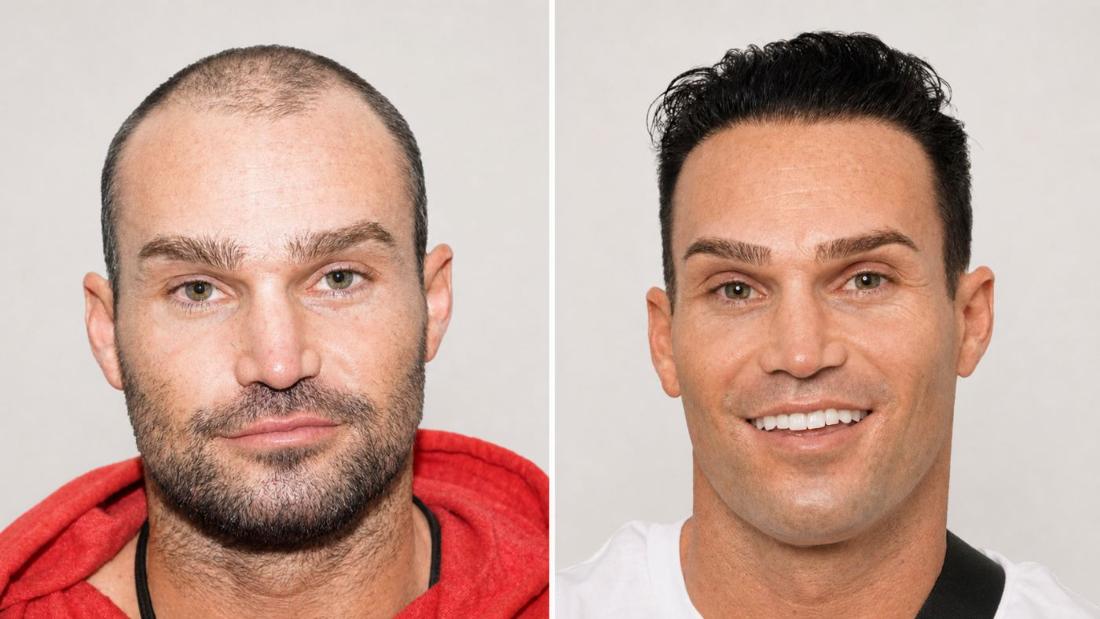
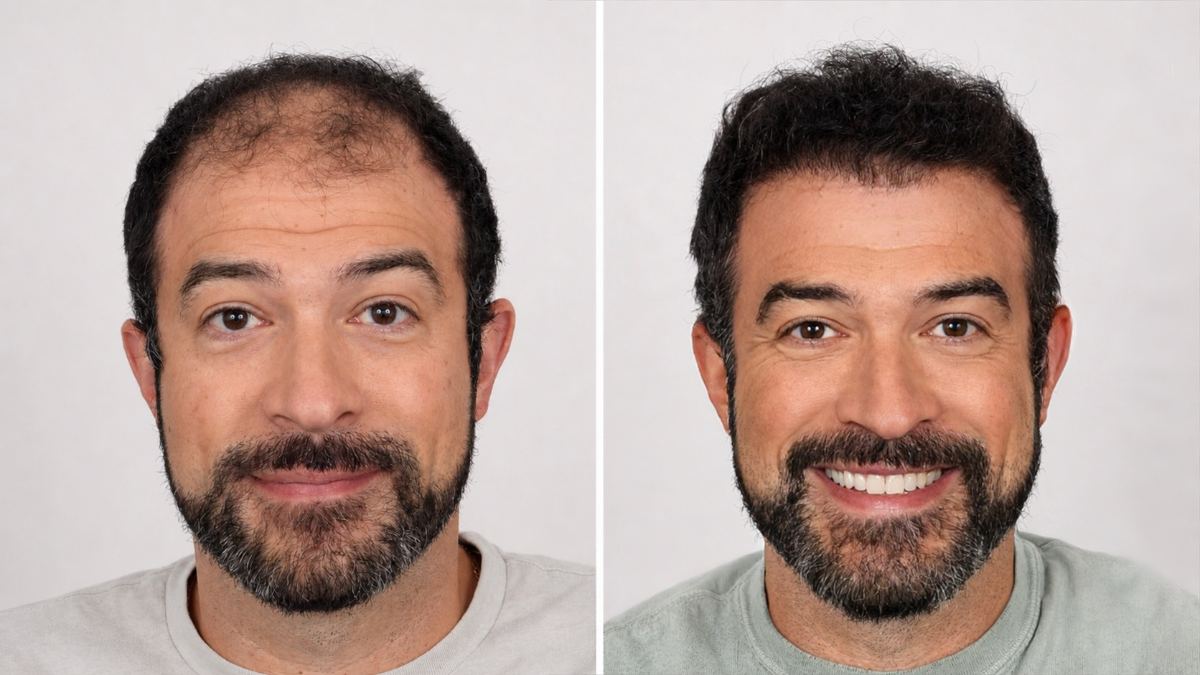
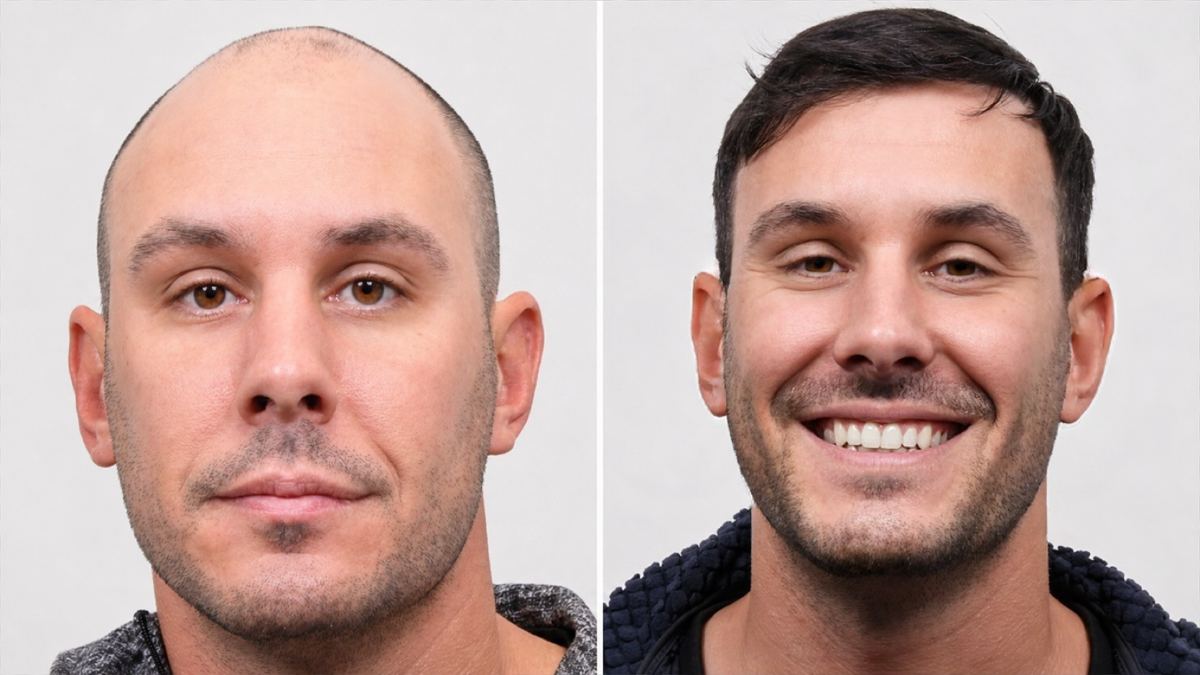
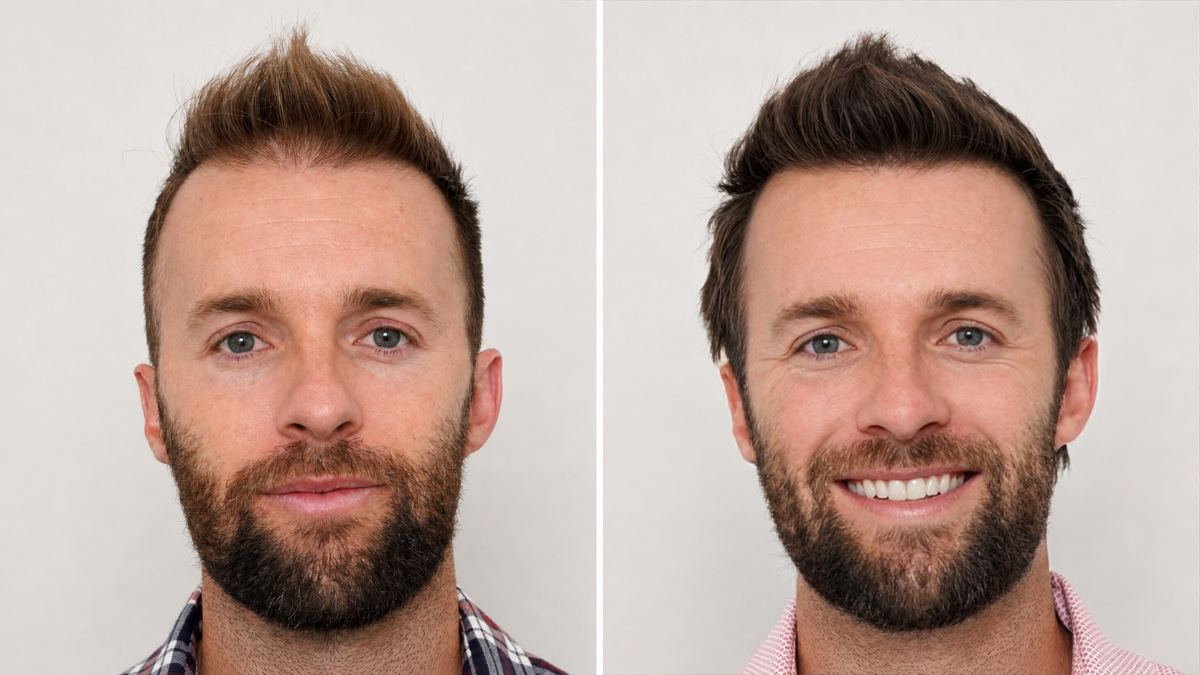
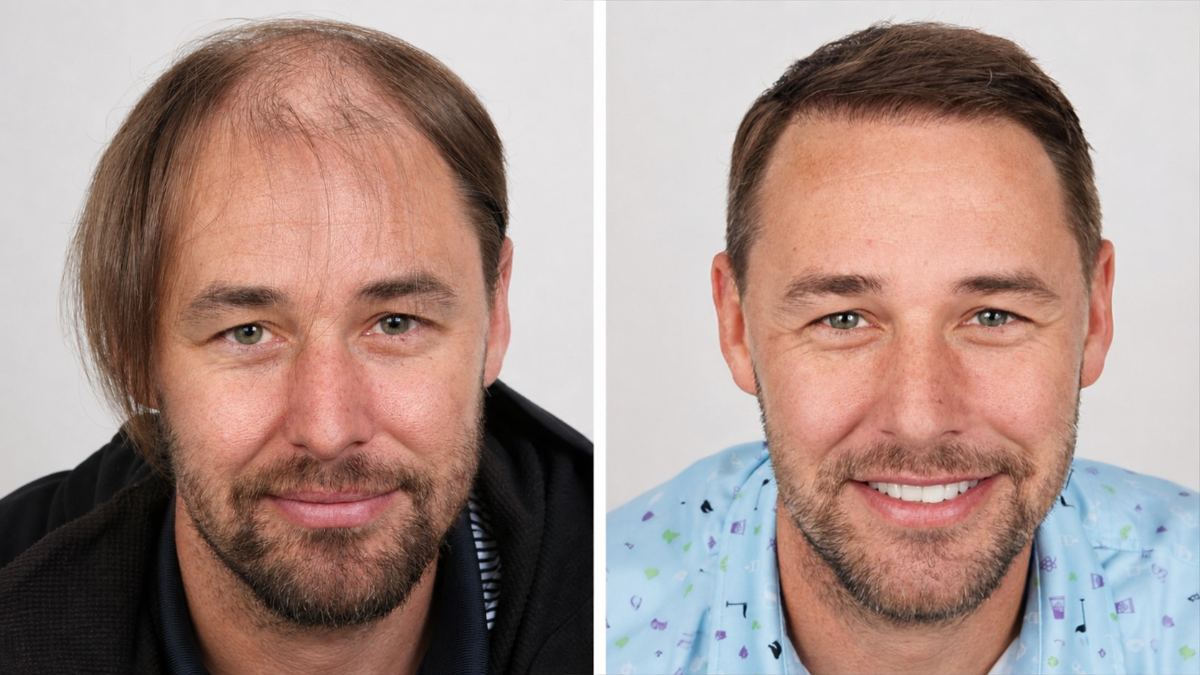
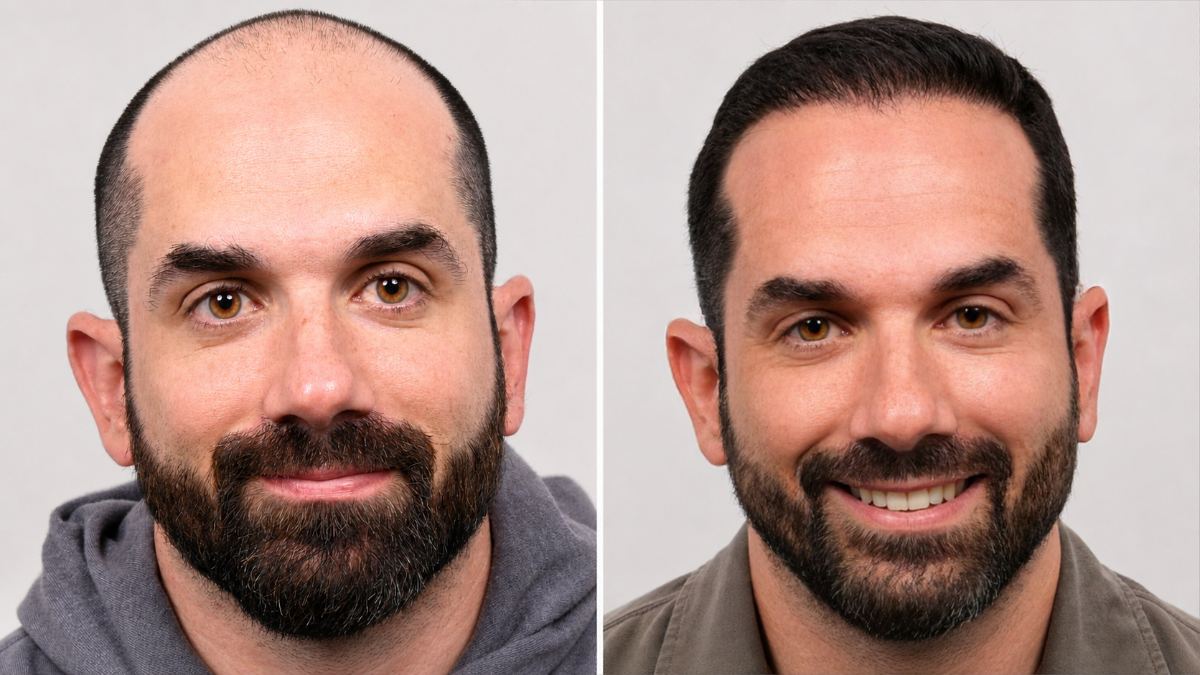
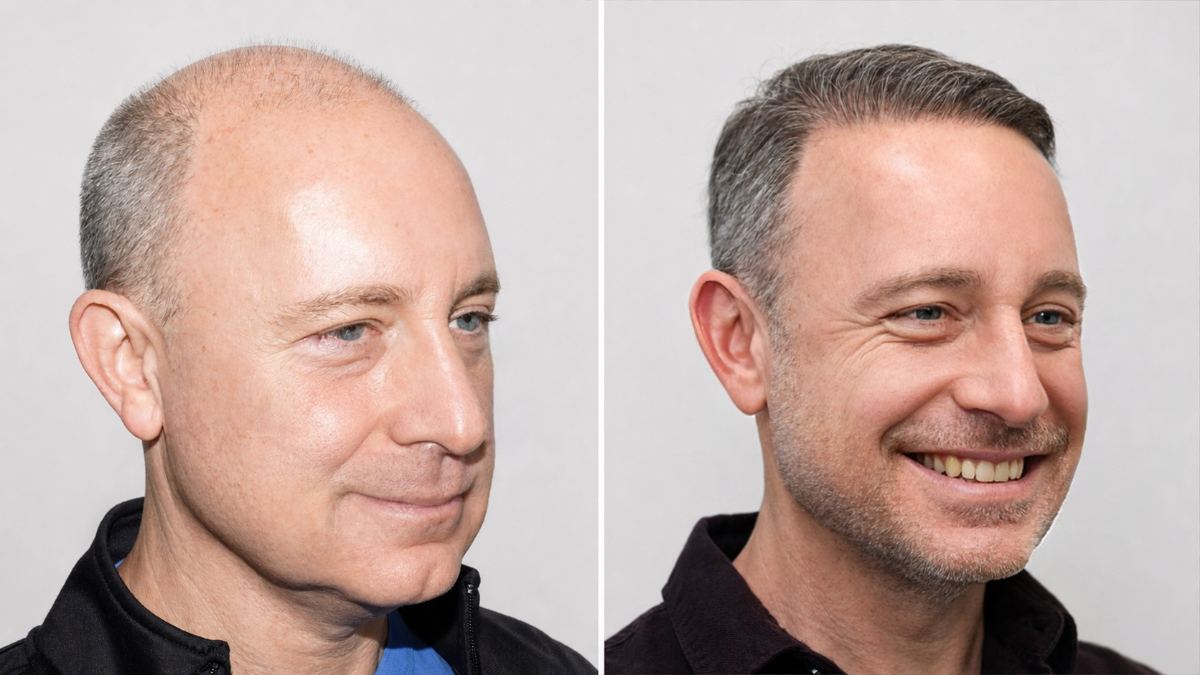
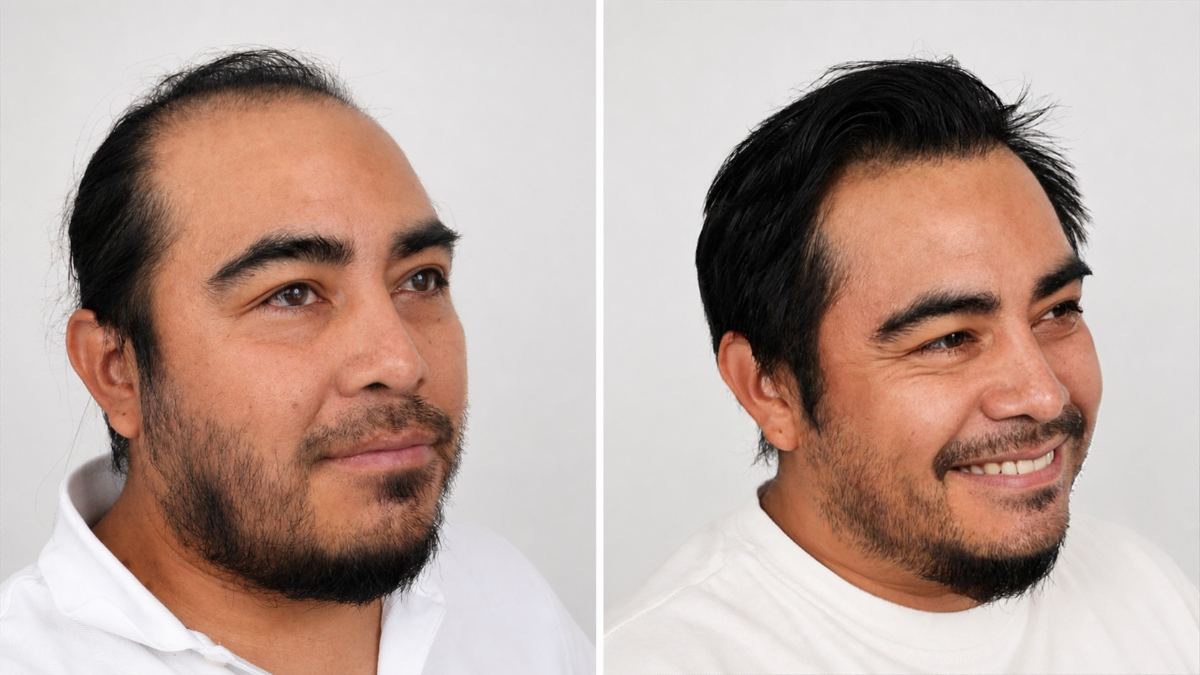
Every photo below is a real Advanced Hair patient: Advanced FUE™, their own natural hair, Guaranteed to Grow for Life™.
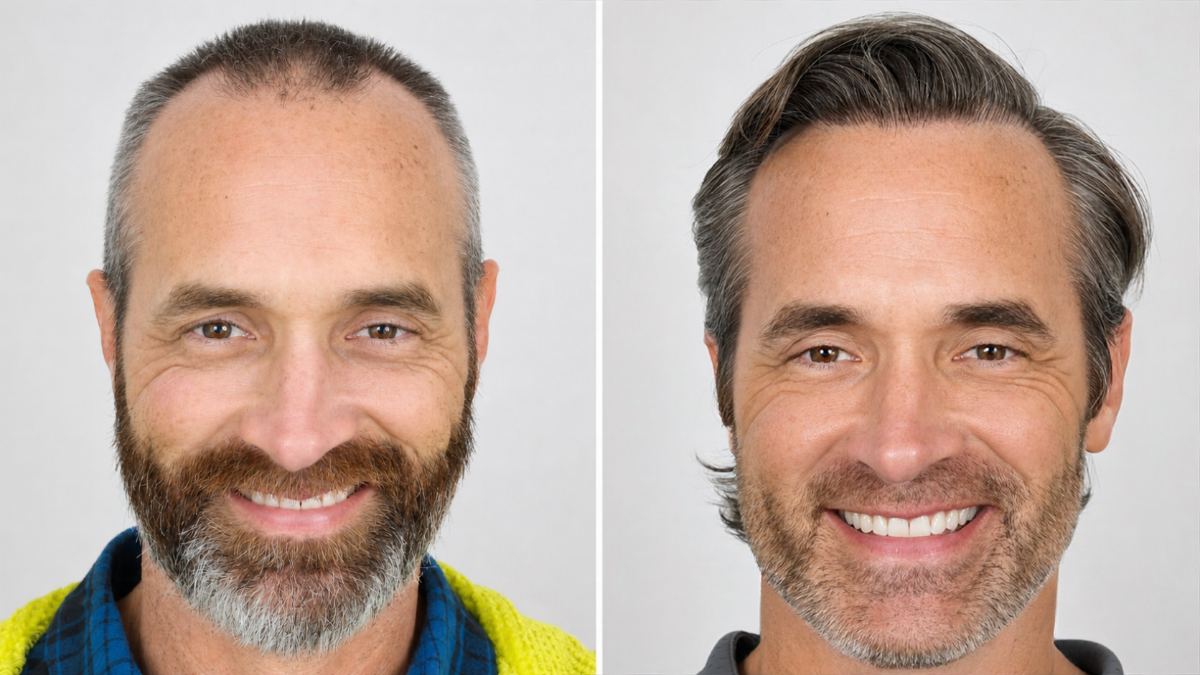
Kyle M. · 3,000 Advanced FUE™ grafts
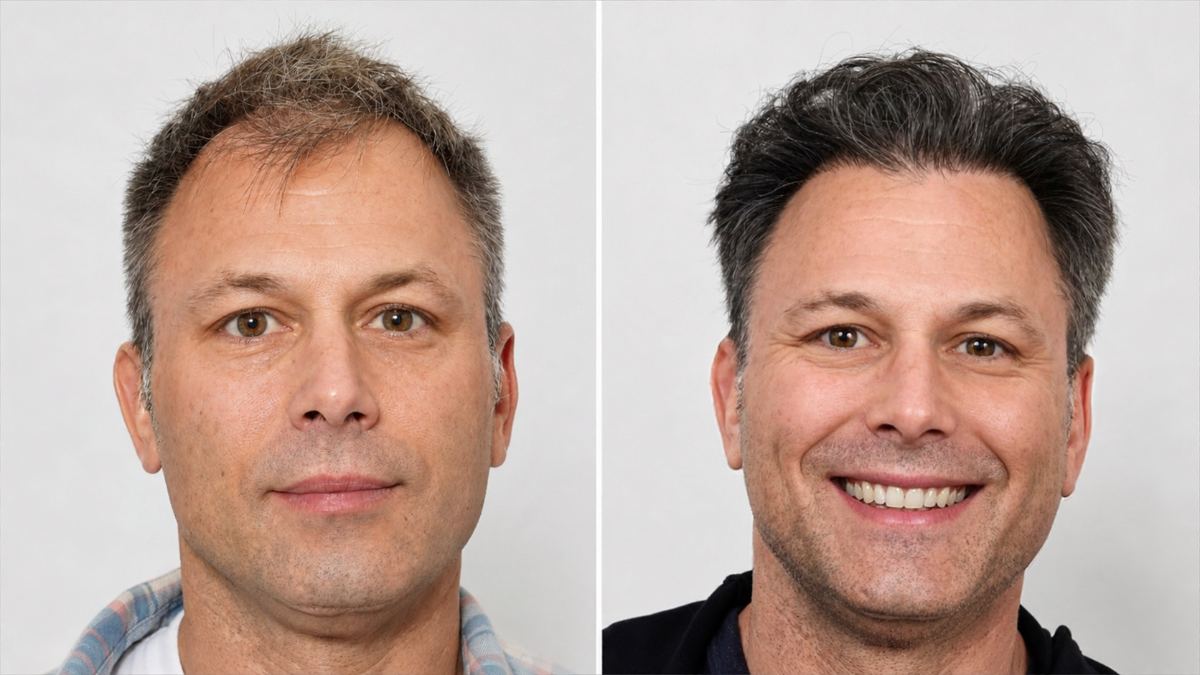
Scott H. · 2,500 Advanced FUE™ grafts
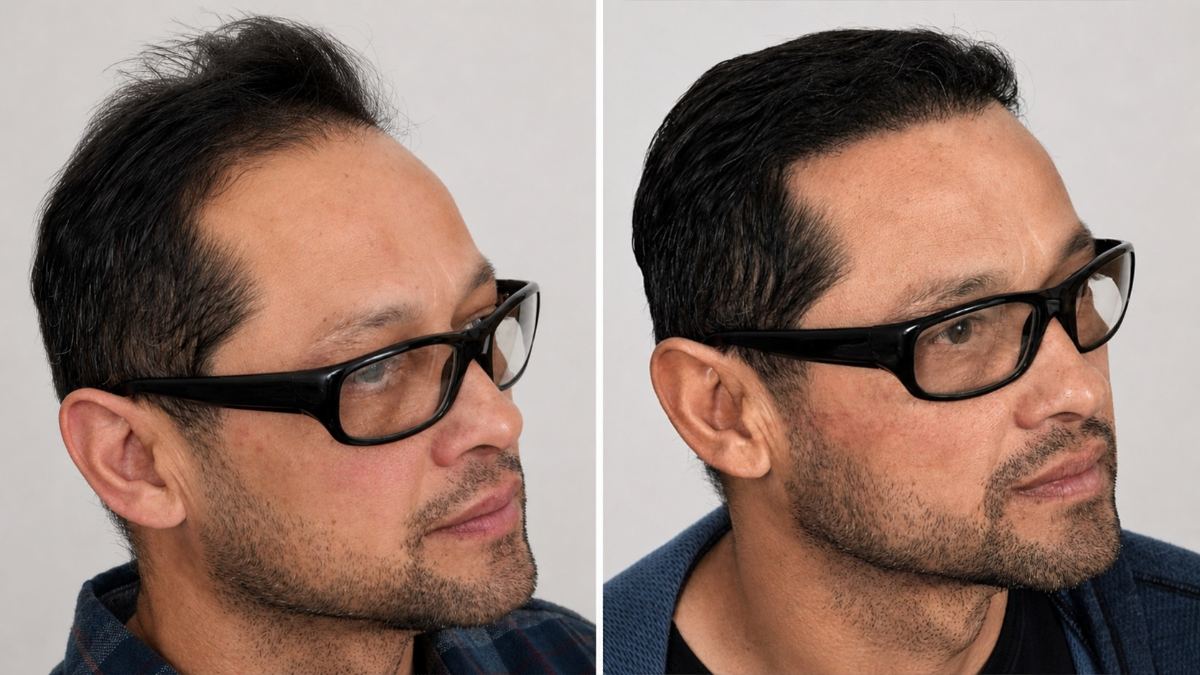
Madison T. · 3,300 Advanced FUE™ grafts
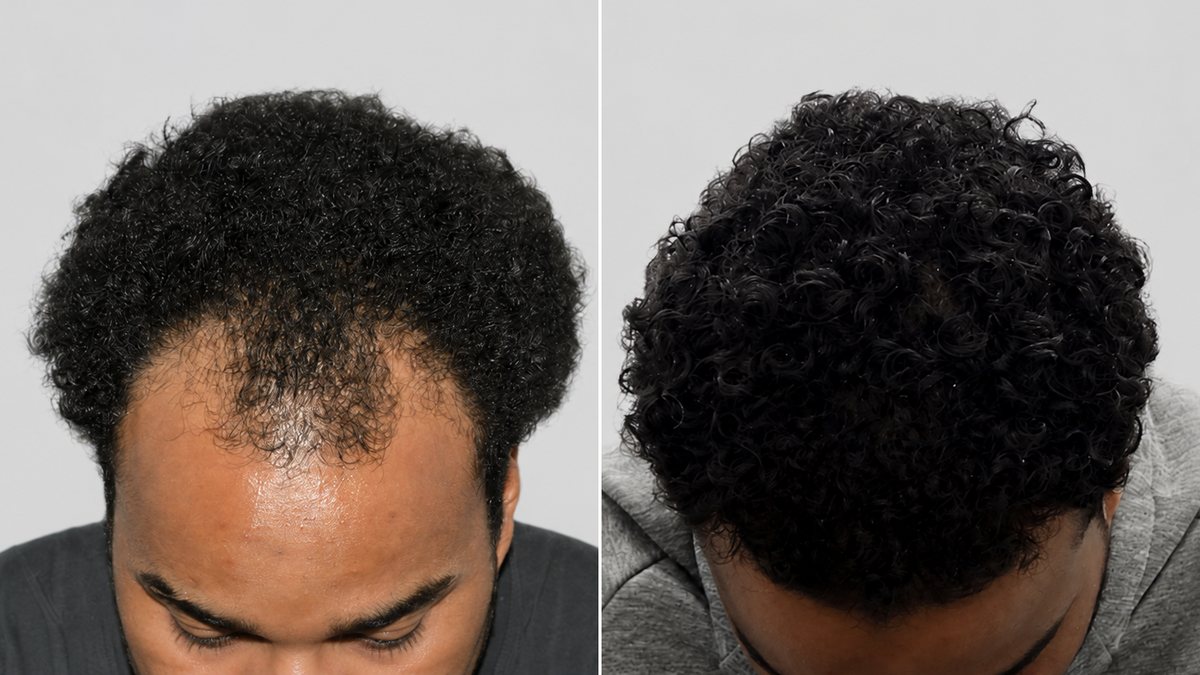
AJ S. · 2,500 Advanced FUE™ grafts
Individual results may vary.
Next step
Get a personalized assessment
The only way to know your graft count, your cost and what your result will look like is a professional evaluation. Consultations are free, and you meet a real expert, not a salesperson.