
Hair Transplant 101: A Comprehensive Guide

The Procedure
Hair Transplant 101: A Comprehensive Guide
Cost, process, graft counts and results. Everything you need to know before your first consultation, in plain language.

Key takeaways
- Most U.S. hair transplants cost $5,000-$15,000+. They are priced per graft, and the rate drops as the graft count rises.
- Advanced FUE™ moves DHT-resistant follicles from the back of your head to where you need them. They keep growing for life.
- Most patients need 2,000 to 3,500 grafts, completed in a single day.
- Final results take 12 to 18 months. Plan the procedure once, with a team that will still be here.
How much does a hair transplant cost?
In the United States, a hair transplant typically costs $5,000-$15,000+. The range is wide because a transplant is not priced as a flat fee. The price follows the number of grafts it takes to reach the density you want.
$5-$15
per graft from reputable practices
$5,000 to $8,000
1,000 grafts
$6,000 to $12,000
2,000 grafts
$10,000+
3,000 grafts and up
The rate per graft usually falls as the procedure grows, so a larger session costs less per graft than a small one. For a full breakdown, including what a written quote should contain, see our hair transplant cost guide.
What affects the price
- Number of grafts. More hair loss means more grafts to cover it, and a higher total.
- The technique. FUE, FUT and variations like DHI take different amounts of time, labor and skill. Precision options such as No-Shave FUE™ sit at the higher end.
- Who performs it. Experienced surgical teams cost more, and they deliver higher graft survival, better density and a hairline no one can pick out.
- Where the clinic is. Major metro areas carry higher operating costs than smaller markets.
How a hair transplant works
A hair transplant is an outpatient procedure that relocates healthy follicles from a donor area, usually the back and sides of the scalp, to the areas that are thinning or bald.
Why it works: donor dominance
Follicles at the back of the head are genetically resistant to DHT, the hormone behind pattern baldness. Moved to a new location, they keep that resistance and keep growing for life.
That is why transplanted hair is permanent. It is your own tissue, so it is never rejected, and it grows, greys, and can be cut and styled like the hair around it.
The procedure, step by step
Most modern procedures are completed in one visit, typically 6 to 10 hours depending on the size of the session. At Advanced Hair Restoration® we call it the Simple 1 Day Treatment®.
01
Design
Your surgeon maps and draws a natural, age-appropriate hairline built around your features and goals.
02
Extraction
Healthy grafts are harvested one at a time from the donor area with Advanced FUE™. No strip, no stitches, no linear scar.
03
Site creation
Tiny openings are made in the recipient area at the exact angle and direction of your natural growth.
04
Placement
The medical team places each graft into its site, one by one, at the density your plan calls for.
Free consultation
See what your result could look like
A consultation is free, private, and with a real expert. You leave with your graft count, a written quote and a plan built around your goals.
How many grafts do you need?
Graft count is the most important number in your plan. It depends on the extent of your loss, the density you want, and your hair itself: thickness, curl, and how much it contrasts with your scalp.
| Area | Typical range |
|---|---|
| Hairline restoration | 1,000 to 2,000 grafts |
| Crown | 1,500 to 3,000 grafts |
| Full restoration, front to back | 3,000 to 5,000+ grafts |
Most patients land between 2,000 and 3,500 grafts for a satisfying transformation. When a plan calls for more, Advanced Hair Restoration® teams routinely place 4,000+ grafts in one day, without overharvesting the donor area.
FUE vs. FUT vs. DHI
| Technique | How it works | What to expect |
|---|---|---|
| Advanced FUE™ | Individual follicular units are extracted one by one with a micro-punch. | No linear scar, fast healing, and short hairstyles are fine afterward. The most widely used modern technique. |
| FUT, the strip method | A strip of scalp is removed, dissected into grafts, and the scalp is stitched closed. | High graft counts in one session, but a permanent linear scar and a longer, less comfortable recovery. |
| DHI | A variation of FUE. An implanter pen creates the site and places the graft in one motion. | Heavily marketed. There is no consistent evidence that it outperforms high-quality FUE. |
Read the full comparison in What Is a Hair Transplant.
When will you see results?
- Weeks 1 to 4. The transplanted hairs shed. This is normal and expected. The roots stay put.
- Months 3 to 4. Fine new growth starts to push through.
- Months 6 to 8. Density and coverage are clearly improving.
- Months 12 to 18. Mature, final results. Thick, naturally textured, and yours to keep.
Is a hair transplant worth it?
It comes down to one thing: the quality of the outcome. A well-performed transplant looks completely natural, needs no concealers or hairpieces, and is permanent. That is why every Advanced FUE™ procedure is Guaranteed to Grow for Life™.
Choosing a provider on price alone is the most common mistake in this industry. Bargain procedures lead to thin results, pluggy hairlines and expensive repair work later. A properly planned procedure with an experienced team is the better long-term value.
Mistakes to avoid
- Choosing a clinic on the lowest price alone.
- Not understanding your own graft requirement before you compare quotes.
- Ignoring future loss. Native hair around the transplant can thin later, and the plan should account for it.
- Assuming every technique and every clinic produces the same result.
Questions patients ask
Hair transplant questions, answered
How long does a hair transplant take?
Most procedures are completed in a single day, usually 6 to 10 hours depending on the graft count. You go home the same day.
Does a hair transplant hurt?
Most people are surprised at how little pain there is. You feel the local anesthetic being placed; once the scalp is numb, the procedure itself is comfortable. Mild tenderness for a few days afterward is typical.
Will people be able to tell?
With Advanced FUE™ there is no linear scar, and the hairline is designed to match your age and features. With No-Shave FUE™, your donor area is never shaved and neither is the hair on top, so you walk out with the same style you walked in with.
Is the result permanent?
Yes. Transplanted follicles come from the DHT-resistant donor zone and keep that resistance in their new location. Advanced FUE™ results are Guaranteed to Grow for Life™.
Real Results
Simple 1 Day Treatment®. Lifetime Results.
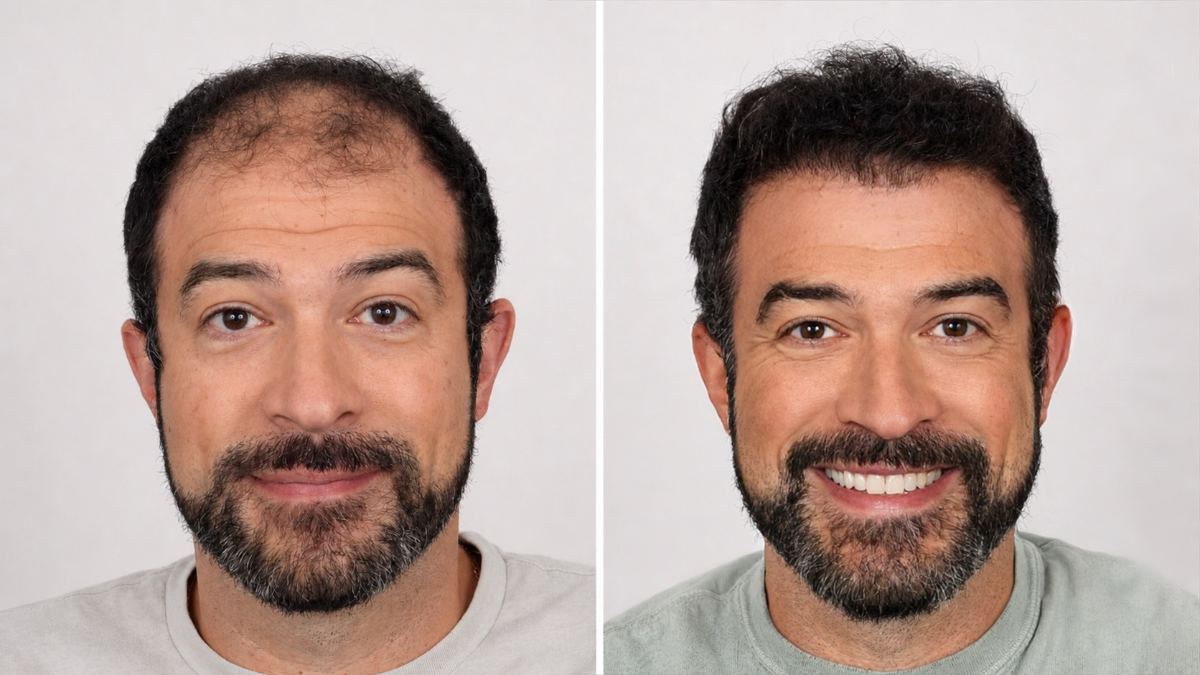
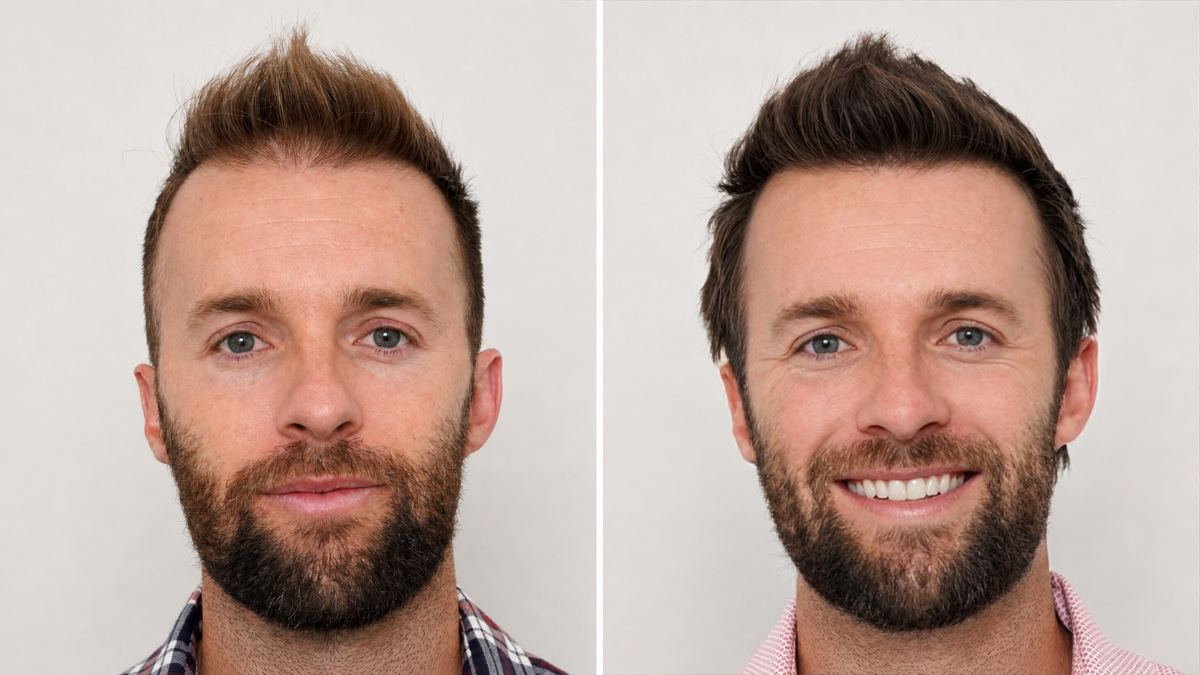
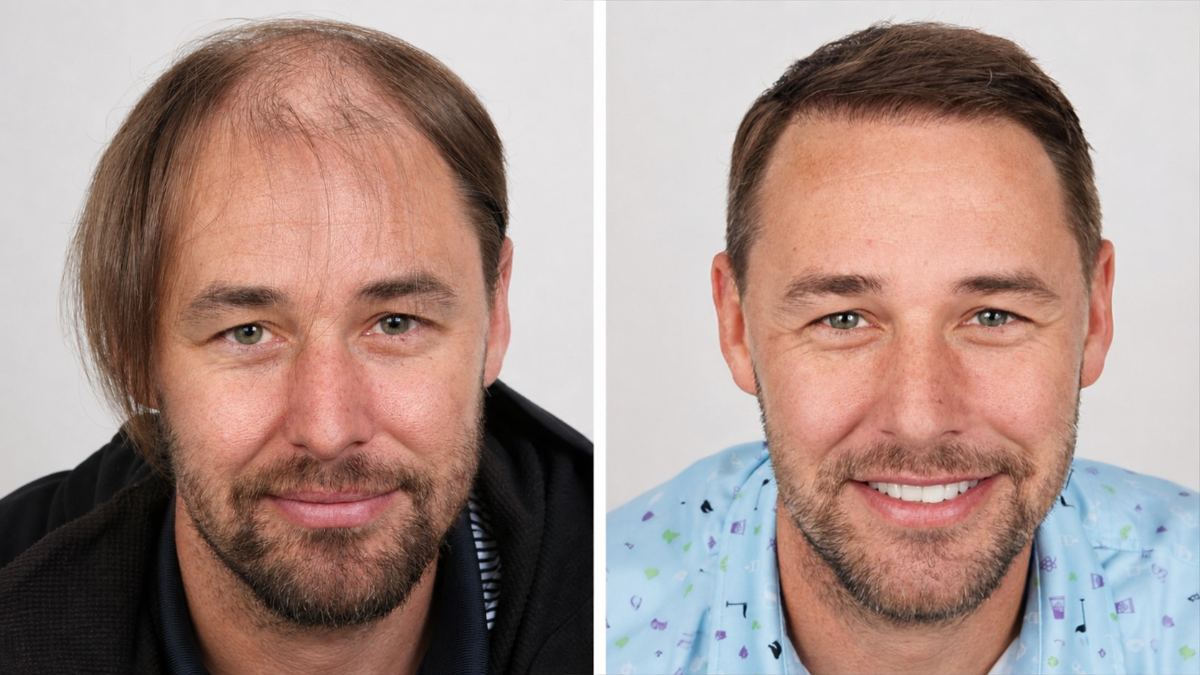
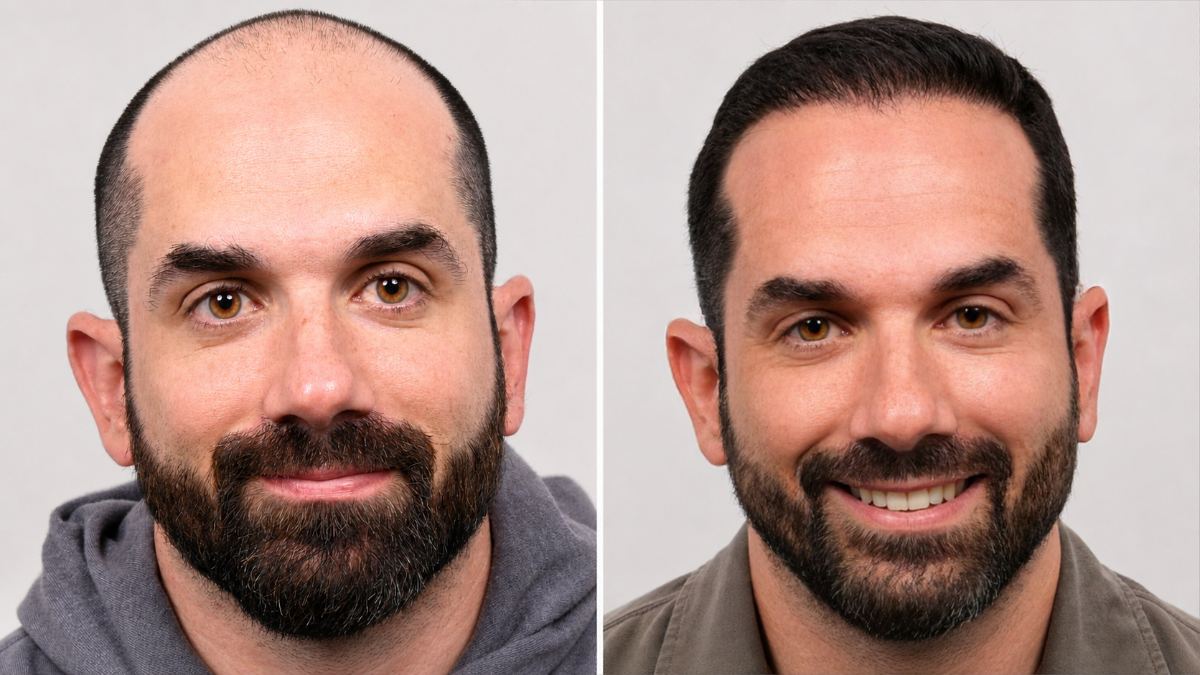
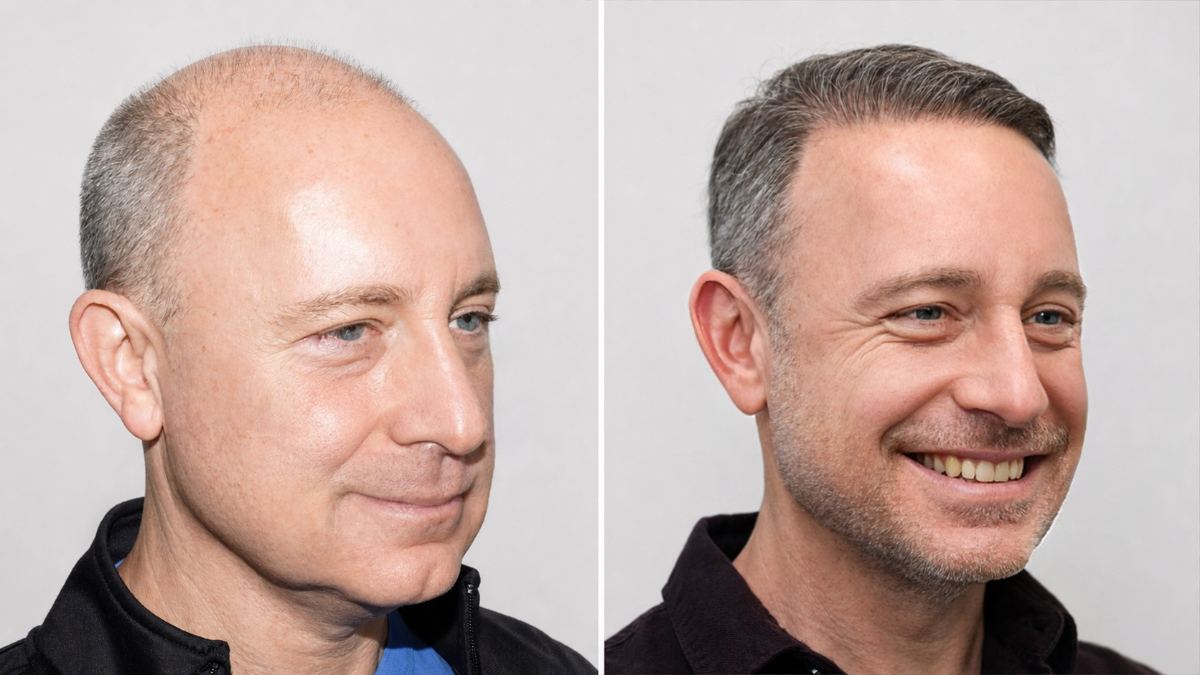
Every photo below is a real Advanced Hair patient: Advanced FUE™, their own natural hair, Guaranteed to Grow for Life™.
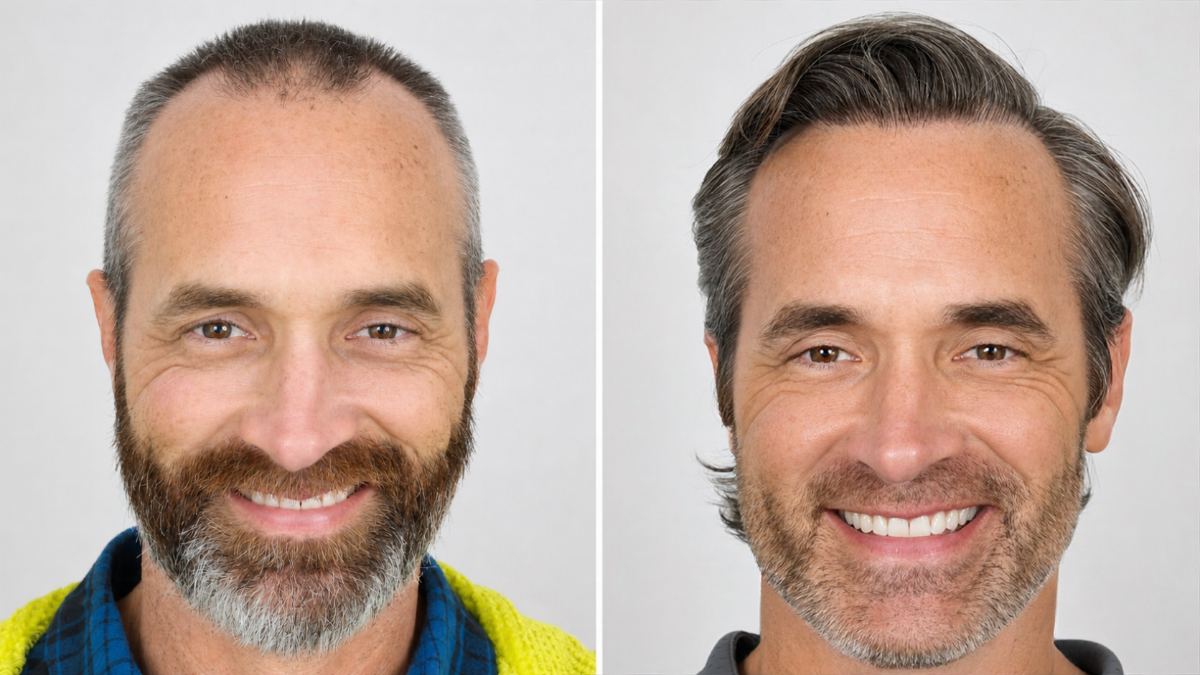
Kyle M. · 3,000 Advanced FUE™ grafts
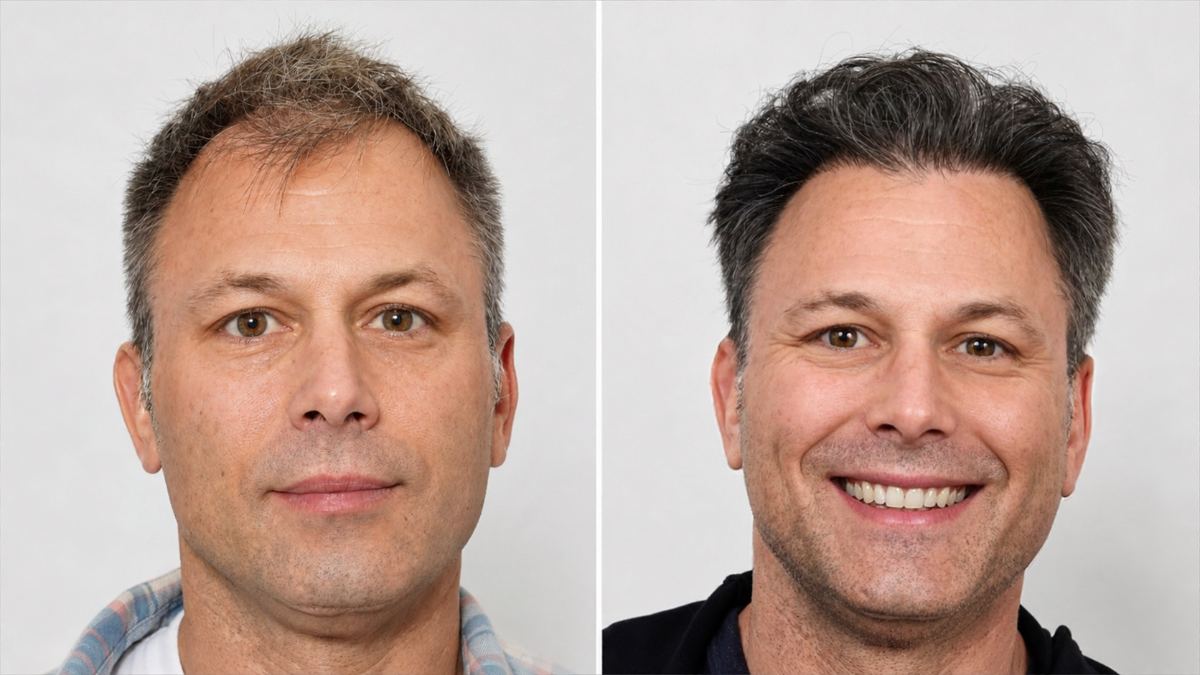
Scott H. · 2,500 Advanced FUE™ grafts
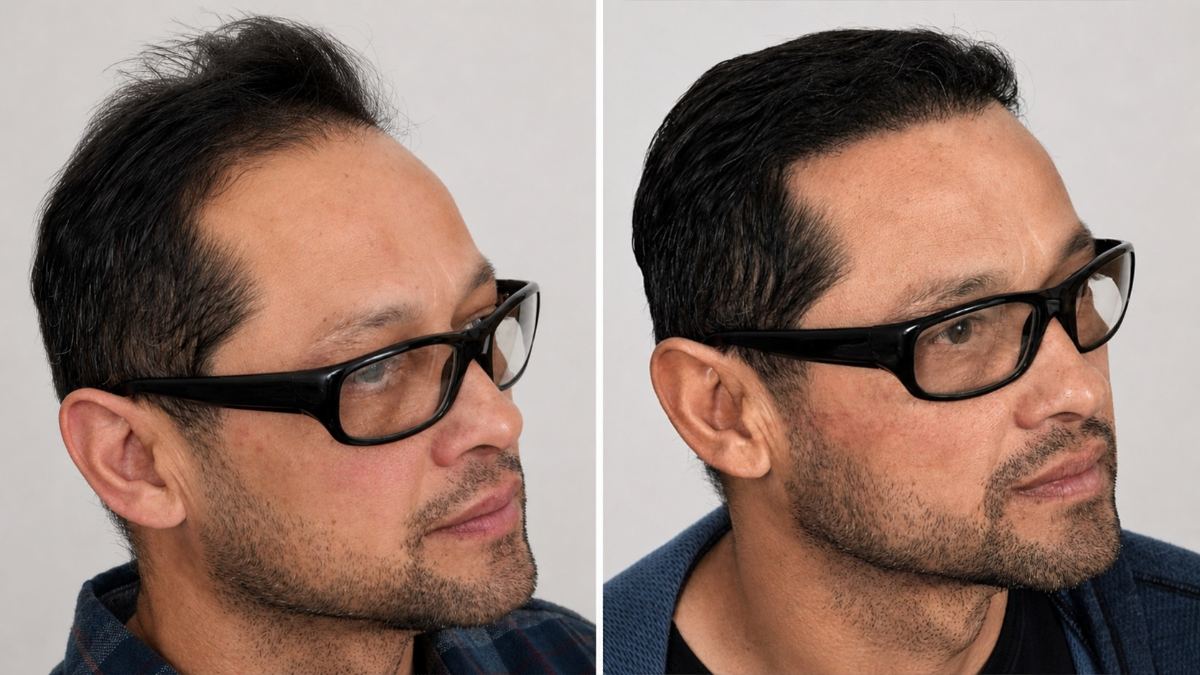
Madison T. · 3,300 Advanced FUE™ grafts
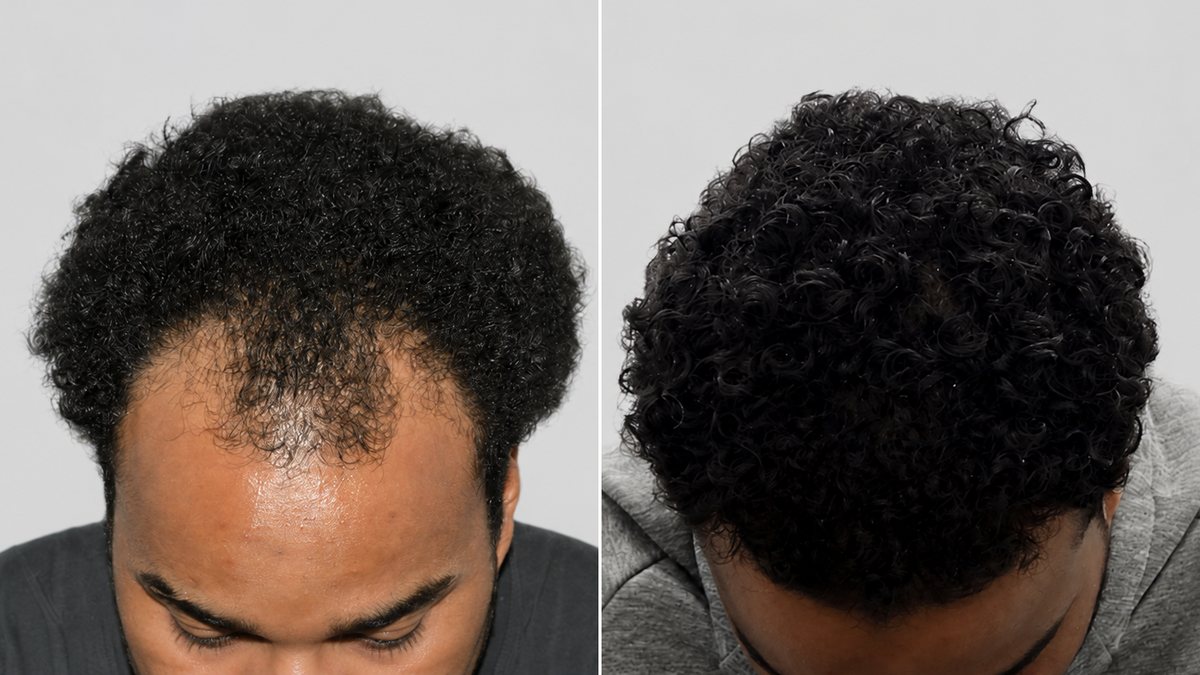
AJ S. · 2,500 Advanced FUE™ grafts
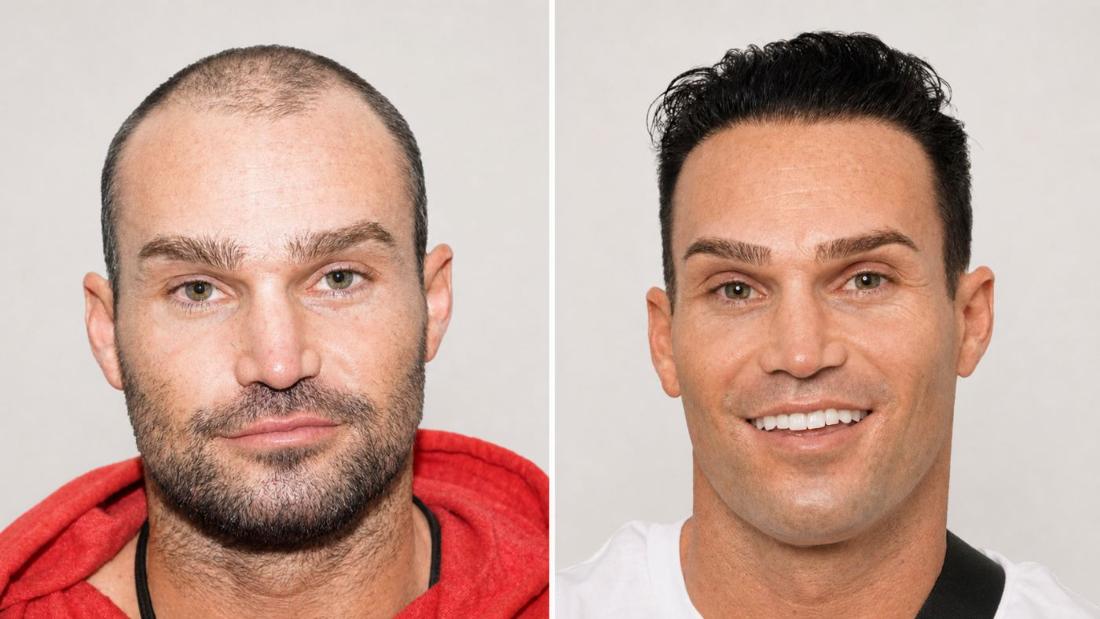
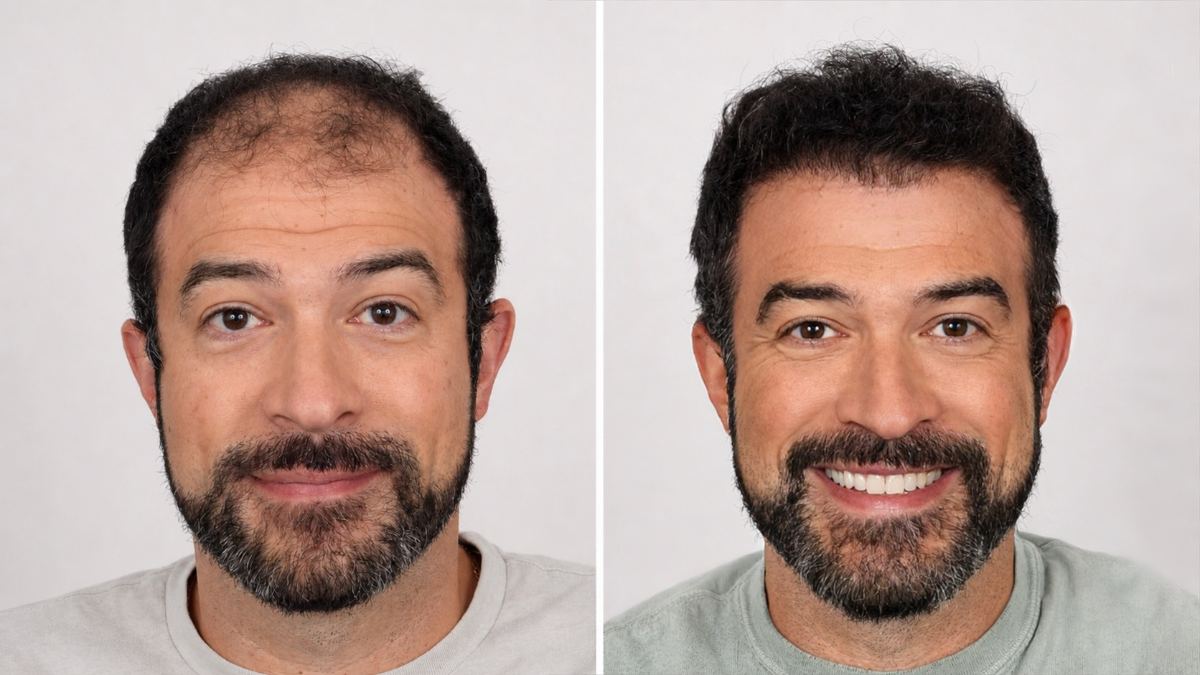
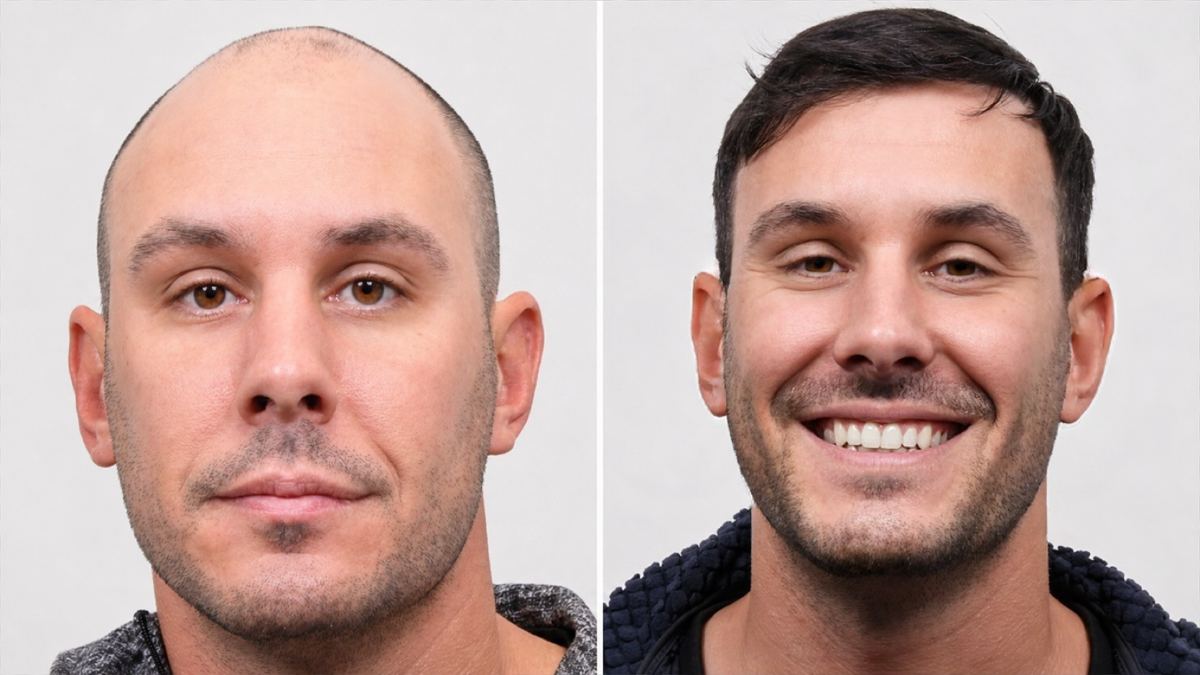
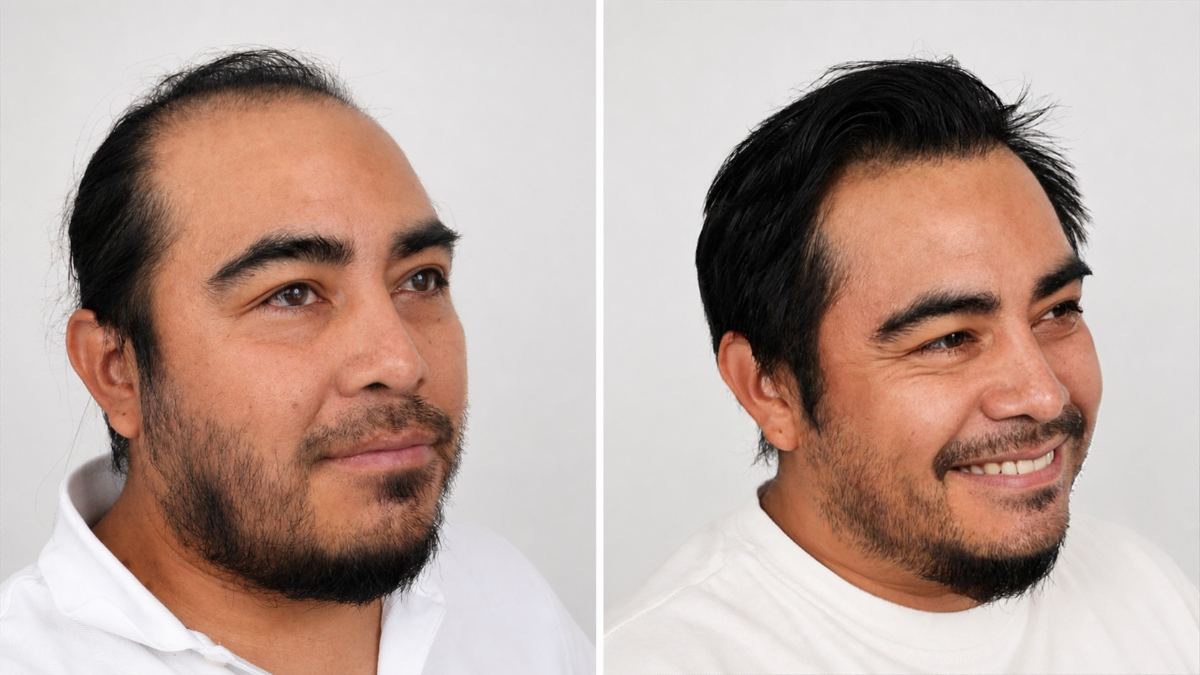
Individual results may vary.
Next step
Get a personalized assessment
The only way to know your graft count, your cost and what your result will look like is a professional evaluation. Consultations are free, and you meet a real expert, not a salesperson.