
What is Clascoterone? A New Hair Loss Treatment

Research
What Is Clascoterone? A New Hair Loss Treatment
The first new mechanism for managing hair loss in over 30 years, if the FDA approves it. What it does, what the trials showed, and what it does not do.

Key takeaways
- Clascoterone is a topical androgen receptor inhibitor. It blocks DHT at the follicle and breaks down quickly, so it does not shift hormones body-wide the way oral finasteride does.
- Two Phase 3 trials (SCALP 1 and SCALP 2, nearly 1,500 men) showed strong hair-count gains and a side-effect profile similar to placebo.
- Like minoxidil and finasteride, it is a management tool, not a cure. Stop using it and the benefit fades.
- As of September 2026 it is not yet approved. Cosmo plans to file with the FDA in the first quarter of 2027. It cannot regrow hair where follicles are already gone.
For more than three decades the medical options for pattern hair loss have been minoxidil and finasteride. Both slow loss. Neither is right for everyone: many patients hesitate over daily pills or the systemic side effects of an oral DHT blocker. Clascoterone 5% topical solution, which completed its Phase 3 program in 2026, would be the first new mechanism in over 30 years if approved.
Why it matters
Androgenetic alopecia is driven by DHT. Over time the hormone binds to susceptible follicles, shrinking them until they stop producing hair. The most effective way to block DHT today is oral finasteride, and because it is a pill it lowers DHT throughout the body, not just at the scalp. That systemic exposure is the main reason some men avoid medical therapy altogether.
A different approach
Clascoterone is applied directly to the scalp. It works as a local androgen receptor inhibitor: a shield at the follicle that stops DHT from attaching to the root. Once absorbed it is broken down quickly, so it does its job locally without meaningful changes to systemic hormones.
Keep in mind
Clascoterone is a management tool, not a permanent fix. Like minoxidil and finasteride, it has to be used continuously to hold its results, and it cannot revive a follicle that is already gone.
The Phase 3 results
Cosmo Pharmaceuticals completed two large Phase 3 trials, SCALP 1 and SCALP 2, across the U.S. and Europe with nearly 1,500 men.
~1,500
men across two Phase 3 trials
539%
relative improvement in target-area hair count vs. placebo, in one trial
Placebo-like
side-effect profile
- Growth. In one trial, patients on clascoterone saw a 539% relative improvement in target-area hair count compared with the placebo vehicle.
- Visible change. Patient-reported outcomes showed men could see the difference themselves, which matters for staying on a treatment.
- Safety. Reported side effects were minimal and similar to placebo, consistent with a localized, non-systemic mechanism.
Free consultation
Want a plan that works today?
New medications are worth watching. Advanced FUE™ is available now, and it is the only option that restores hair where it is already gone. A free consultation tells you which tools belong in your plan.
When will it be available?
The 12-month safety follow-up was completed and reported in April 2026, with long-term safety comparable to placebo. As of September 2026, Cosmo Pharmaceuticals plans to submit to the FDA in the first quarter of 2027 and to European regulators in the second quarter of 2027. If approved, clascoterone becomes the first topical androgen receptor inhibitor indicated for hair loss. Until then, no clinic can offer it.
Where it fits
| Option | How it works | Best for |
|---|---|---|
| Clascoterone (pending) | Blocks DHT at the follicle, topically | Slowing loss in men who want to avoid oral DHT blockers |
| Finasteride | Lowers DHT throughout the body | Slowing mild to moderate loss |
| Minoxidil | Extends the growth phase, improves blood flow | Maintaining hair and mild regrowth |
| Advanced FUE™ transplant | Moves permanent, DHT-resistant follicles to areas of loss | Restoring density and hairline, permanently |
Advanced Hair Restoration® follows every credible development, and we will offer clascoterone if and when it is approved and proven. In the meantime, our physicians offer the treatments that permanently address hair loss today: Advanced FUE™ hair transplants and customized hairline restoration, Guaranteed to Grow for Life™.
Questions patients ask
Clascoterone questions
Is clascoterone the same as the acne medication?
Same molecule, different product. Clascoterone 1% cream is FDA-approved for acne. The 5% topical solution for hair loss is a separate formulation that finished Phase 3 trials in 2026; as of September 2026 it has not yet been submitted for FDA review, with filing planned for early 2027.
Does it have the sexual side effects associated with finasteride?
In the Phase 3 trials, side effects were minimal and similar to placebo, consistent with a treatment that acts locally and breaks down before it circulates. Long-term data are still being collected.
Could I use clascoterone after a hair transplant?
Transplanted hair does not need it. Once available, it could be one option for protecting the native hair around a transplant, the same role finasteride and minoxidil play today. Your physician decides.
Real Results
Simple 1 Day Treatment®. Lifetime Results.
Every photo below is a real Advanced Hair patient: Advanced FUE™, their own natural hair, Guaranteed to Grow for Life™.

Kyle M. · 3,000 Advanced FUE™ grafts

Scott H. · 2,500 Advanced FUE™ grafts

Madison T. · 3,300 Advanced FUE™ grafts
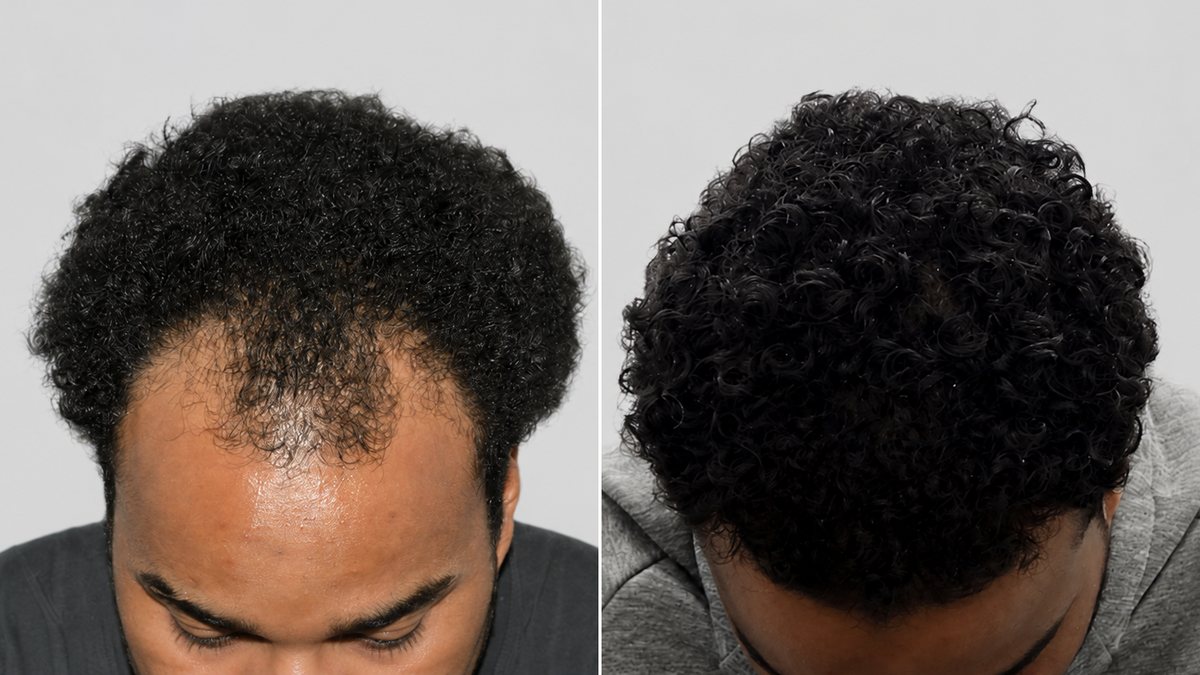
AJ S. · 2,500 Advanced FUE™ grafts

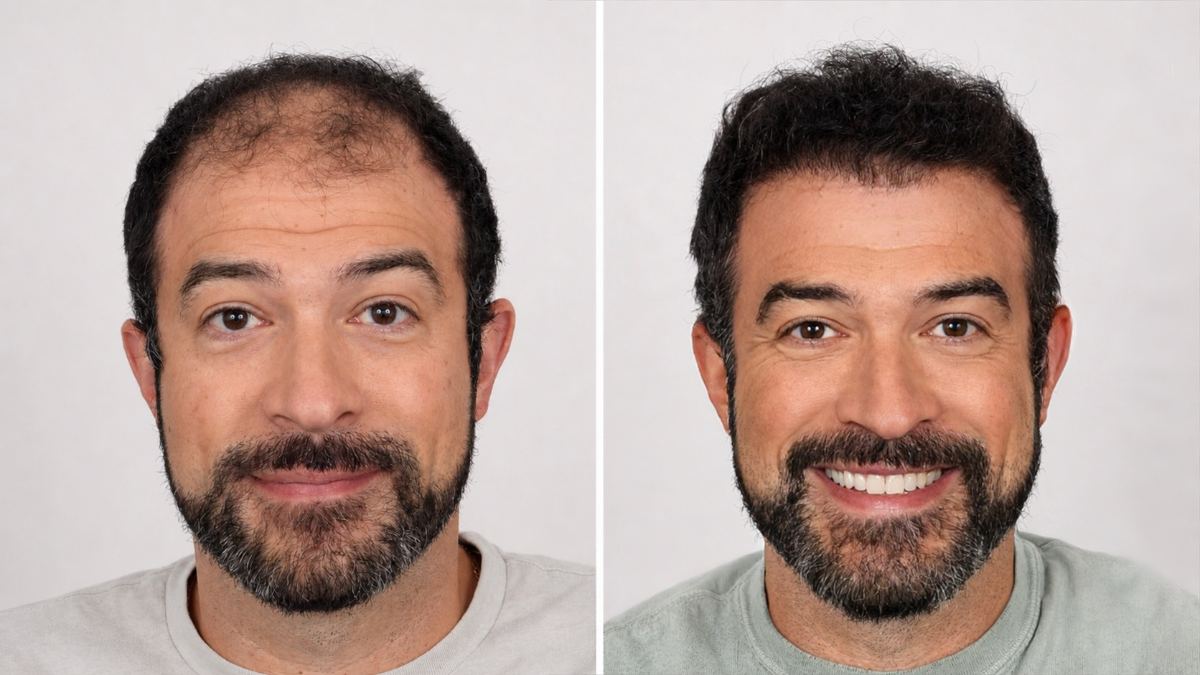


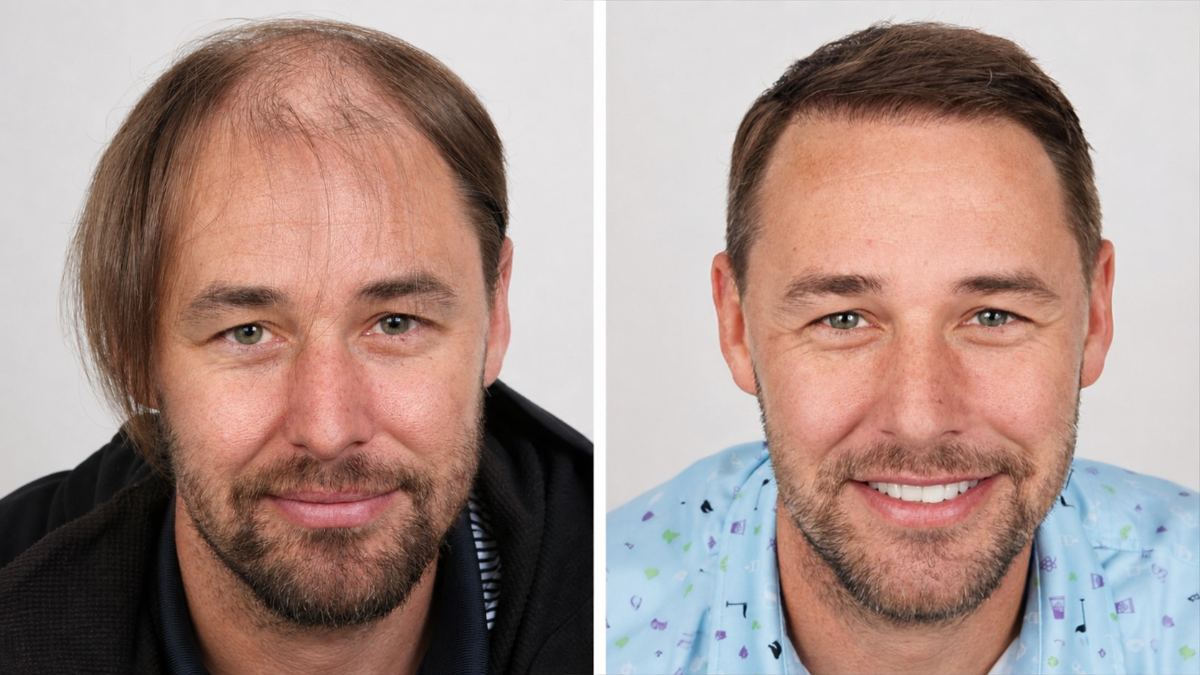
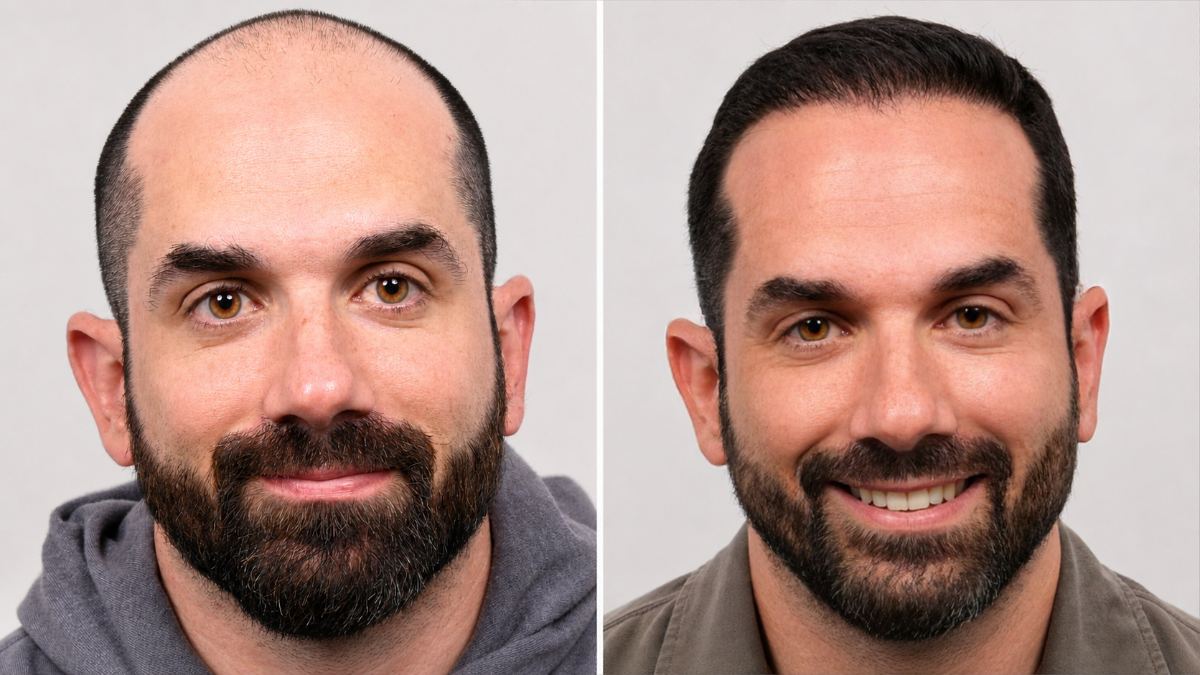
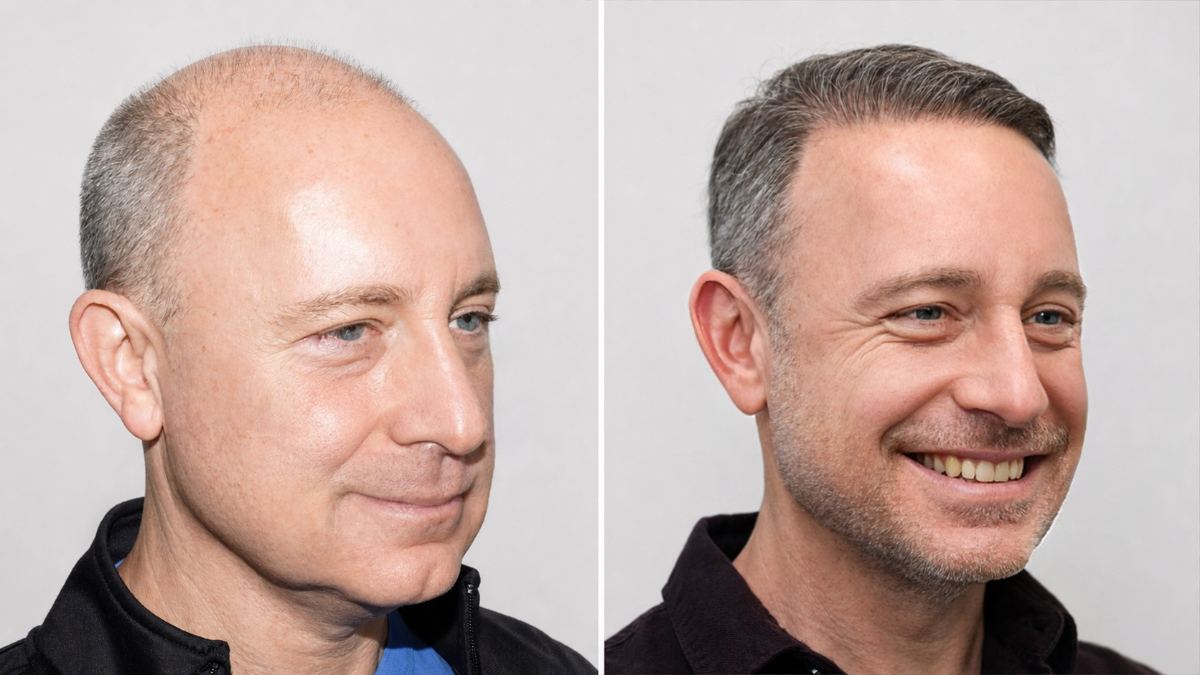

Individual results may vary.
Next step
Get a personalized assessment
The only way to know your graft count, your cost and what your result will look like is a professional evaluation. Consultations are free, and you meet a real expert, not a salesperson.