
Male vs. Female Hairlines: Understanding the Key Differences

Hair Loss Science
Male vs. Female Hairlines: Understanding the Key Differences
The hairline is a key indicator of gender and age. The differences between a male vs female hairline are fundamental to facial aesthetics. Understanding these distinctions in shape and height is the foundation of truly natural hair restoration.

Key takeaways
- A male hairline is angular and sits higher on the forehead, with distinct recessions at the temples that often form a widow’s peak or an “M” shape.
- A female hairline sits lower, with a gentle, rounded or bell-shaped curve that softly frames the face.
- With age, a male hairline tends to recede at the temples because of sensitivity to DHT. A female hairline is far less prone to recession; if thinning occurs, it is usually diffuse across the scalp.
- A natural-looking restored hairline is built in layers, from single-hair grafts at the very edge to larger grafts behind them, and is designed to suit the patient’s gender and age.
The difference between a male vs female hairline does more than just mark where your hair begins. It frames your facial features, communicates gender and age, and plays a crucial role in your overall appearance. While every hairline is unique, the typical male hairline and female hairline follow distinct anatomical rules. Understanding these differences is essential for achieving a balanced, natural-looking result in hair restoration.
What is a hairline?
A hairline is the edge of the hair-bearing scalp, creating a transition from the forehead to the denser hair behind it. Because of its prominent position, its shape and height have a powerful effect on facial harmony. An angular, M-shaped male hairline is a classic masculine trait, while a lower, rounded female hairline typically conveys femininity.
Key characteristics of male and female hairlines
The primary distinctions between hairline types can be seen in their shape, position, and how they evolve over time.
The male hairline
A mature male hairline is characterized by its angularity and higher position on the forehead. Its key traits:
- Shape. The classic male hairline is straighter across the forehead with distinct recessions at the temples, often forming a “widow’s peak” or an “M” shape.
- Position. It sits higher on the forehead compared to a female hairline.
- Aging. This hairline is prone to progressive recession, especially at the temples, due to sensitivity to the hormone DHT (dihydrotestosterone).
The female hairline
A female hairline is defined by its softer contour and lower placement on the forehead. Its key traits:
- Shape. A typical female hairline has a gentle, rounded or bell-shaped curve that softly frames the face.
- Position. It sits lower on the forehead, creating a shorter, more balanced appearance.
- Aging. It is far less prone to recession. If thinning occurs, it is generally more diffuse across the scalp rather than a receding line.
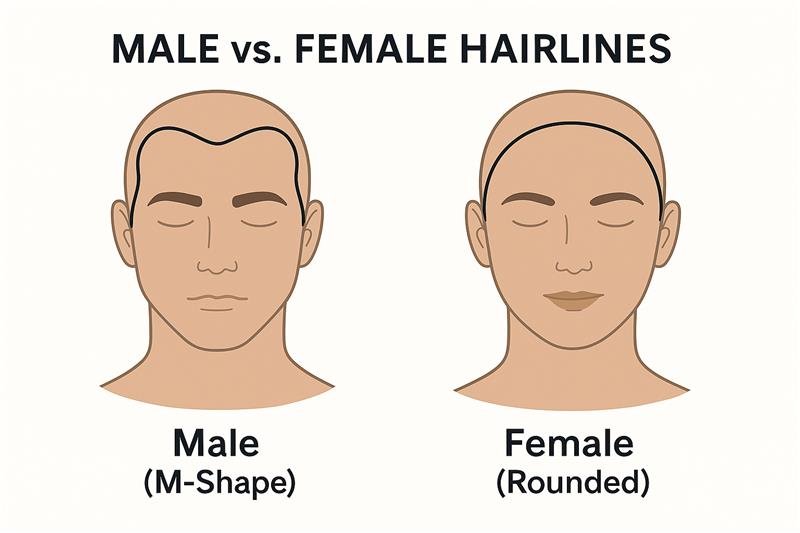
Summary: male hairline vs. female hairline
| Trait | Male hairline | Female hairline |
|---|---|---|
| Shape | Angular, M-shaped | Rounded, curved |
| Position | Higher on the forehead | Lower on the forehead |
| Aging pattern | Temple recession | Diffuse thinning |
Free consultation
Get a hairline designed for your face
Bring your hairline goals to a free consultation with an Advanced Hair Restoration® physician. Consultations are in person, so the physician can examine your scalp and donor area directly and map your exact graft count.
The art and science of a natural hairline
A world-class hairline isn’t just about placing hair; it’s about meticulously recreating nature. This requires a sophisticated layering technique that blends art with medical precision. The layers form three zones, from the very front edge back:
01
The transition zone
The very front edge is created with single-hair grafts placed in an irregular pattern, giving the soft, feathered transition that all natural hairlines have.
02
The defining zone
Just behind the singles, two- and three-hair grafts are densely packed to build the core strength of the hairline without a “pluggy” look.
03
The support zone
Further back, larger grafts add volume and seamlessly transition the restored hairline into the native hair.
This artistic layering is what makes a modern FUE hairline look completely undetectable, soft at the very edge, yet dense and full overall.
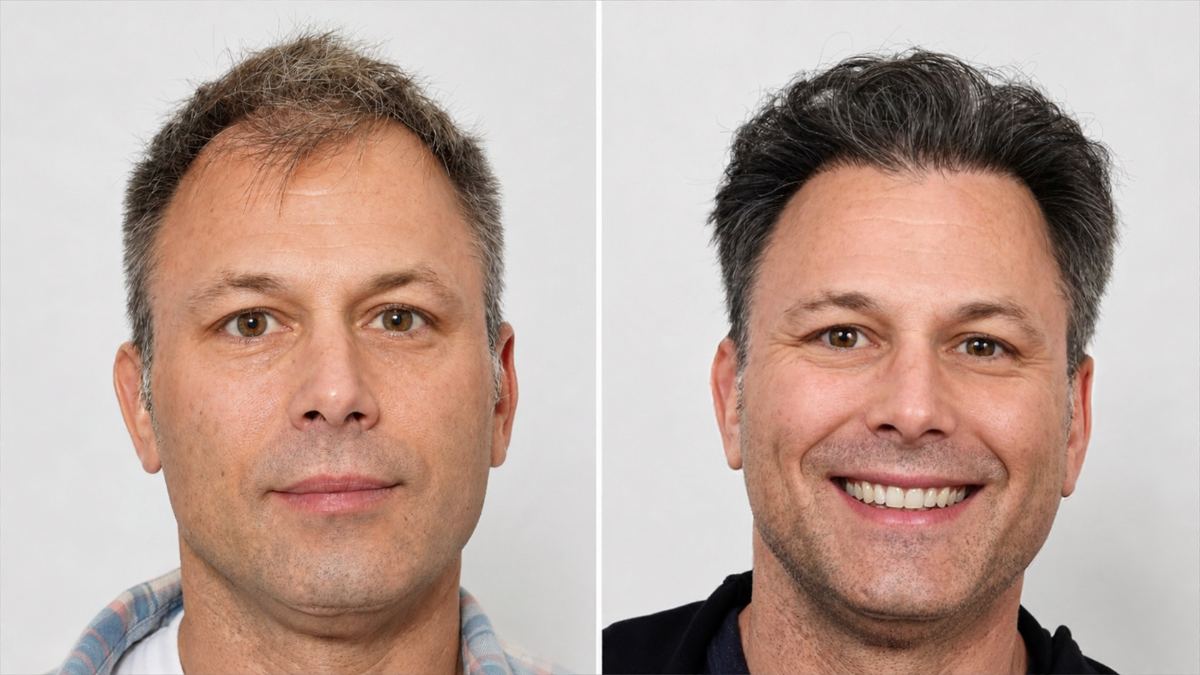
Why expert hairline design is non-negotiable
Designing the perfect male or female hairline is an art form. It demands a deep understanding of facial anatomy, aging, and aesthetics to create a result that looks natural for decades.
Unfortunately, a lack of artistry can lead to irreversible mistakes.
- Age-inappropriate design. Placing a male hairline too low will look unnatural as a man ages. A master surgeon plans for the future.
- Incorrect gender characteristics. Restoring a male hairline with a rounded, feminine shape disrupts facial harmony. The opposite is also true. Gender-correct design is critical.
- The ultimate red flag. If a physician sketches a design that seems overly aggressive or unnatural during your consultation, consider it a serious warning. A proper consultation should focus on a conservative, natural, and long-lasting outcome.
Conclusion
Your hairline is a fundamental part of your identity. The distinct anatomical differences in a male vs female hairline must be respected to achieve authentic, natural-looking hair restoration.
At Advanced Hair Restoration®, we merge medical expertise with artistic vision to design hairlines that do more than just restore what was lost. They restore confidence, balance, and a natural appearance that stands the test of time.
Questions patients ask
Male vs. female hairline questions
What is the difference between a male and a female hairline?
Shape, position, and how each changes with age. A male hairline is angular and sits higher on the forehead: straighter across, with distinct recessions at the temples that often form a widow’s peak or an “M” shape. A female hairline sits lower, with a gentle, rounded or bell-shaped curve that softly frames the face. With age, a male hairline tends to recede at the temples, while a female hairline is far less prone to recession.
Why does a male hairline recede at the temples?
A male hairline is prone to progressive recession, especially at the temples, due to sensitivity to the hormone DHT (dihydrotestosterone). A female hairline is far less prone to recession. If thinning occurs, it is generally more diffuse across the scalp rather than a receding line.
How is a natural-looking hairline created in a hair transplant?
With a layering technique in three zones. The very front edge uses single-hair grafts in an irregular pattern for a soft, feathered transition. Just behind them, two- and three-hair grafts are densely packed to build the core strength of the hairline without a “pluggy” look. Further back, larger grafts add volume and blend the restored hairline into the native hair.
What are the warning signs of a poorly designed hairline?
Two design mistakes stand out. A male hairline placed too low will look unnatural as a man ages, and a hairline with the wrong gender characteristics, such as a rounded, feminine shape on a man or an angular, masculine shape on a woman, disrupts facial harmony. If a physician sketches a design that seems overly aggressive or unnatural during your consultation, consider it a serious warning. A proper consultation should focus on a conservative, natural, and long-lasting outcome.
Real Results
Simple 1 Day Treatment®. Lifetime Results.
Every photo below is a real Advanced Hair patient: Advanced FUE™, their own natural hair, Guaranteed to Grow for Life™.

Kyle M. · 3,000 Advanced FUE™ grafts
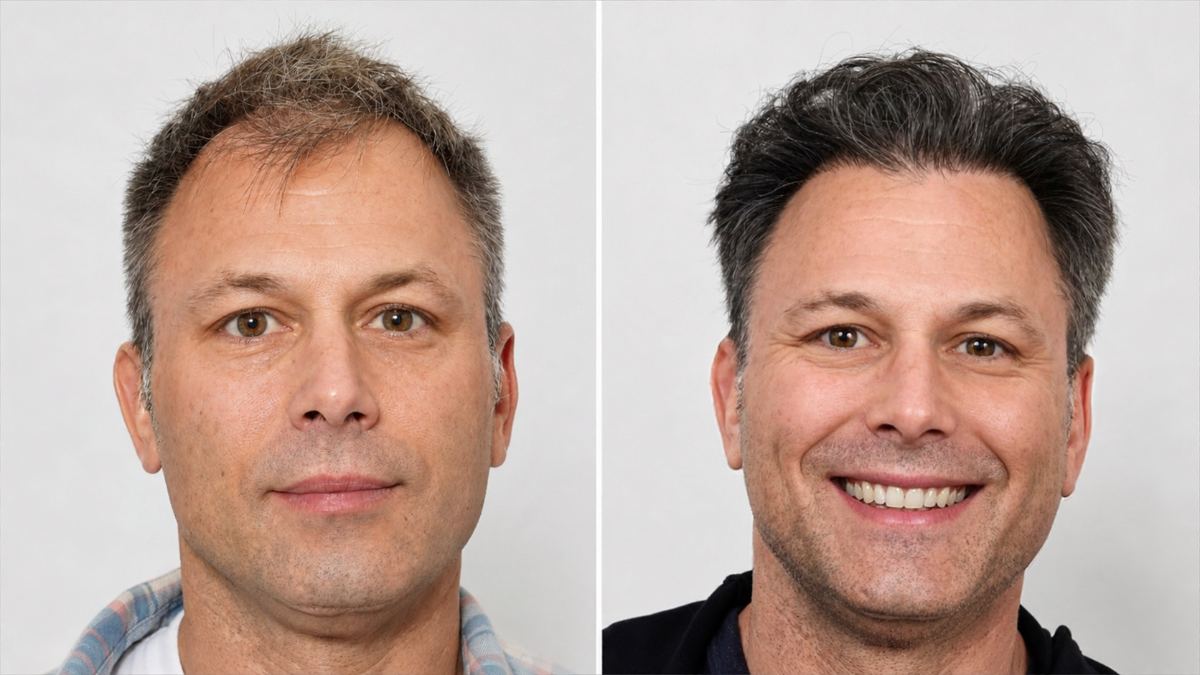
Scott H. · 2,500 Advanced FUE™ grafts
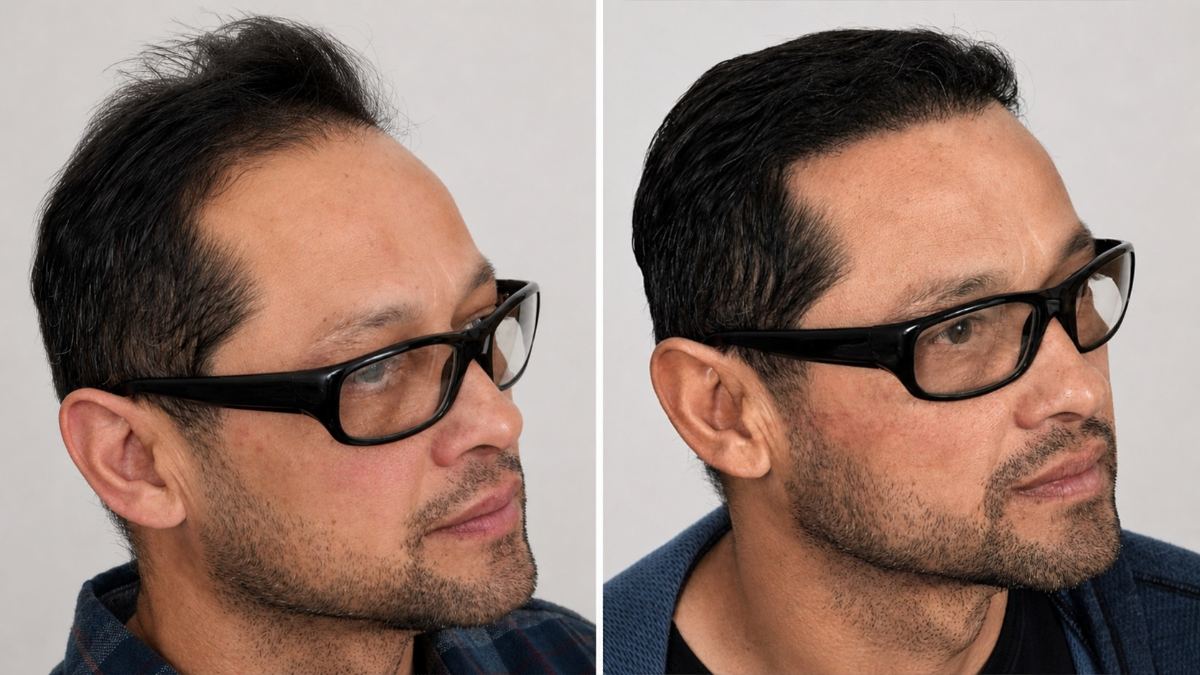
Madison T. · 3,300 Advanced FUE™ grafts
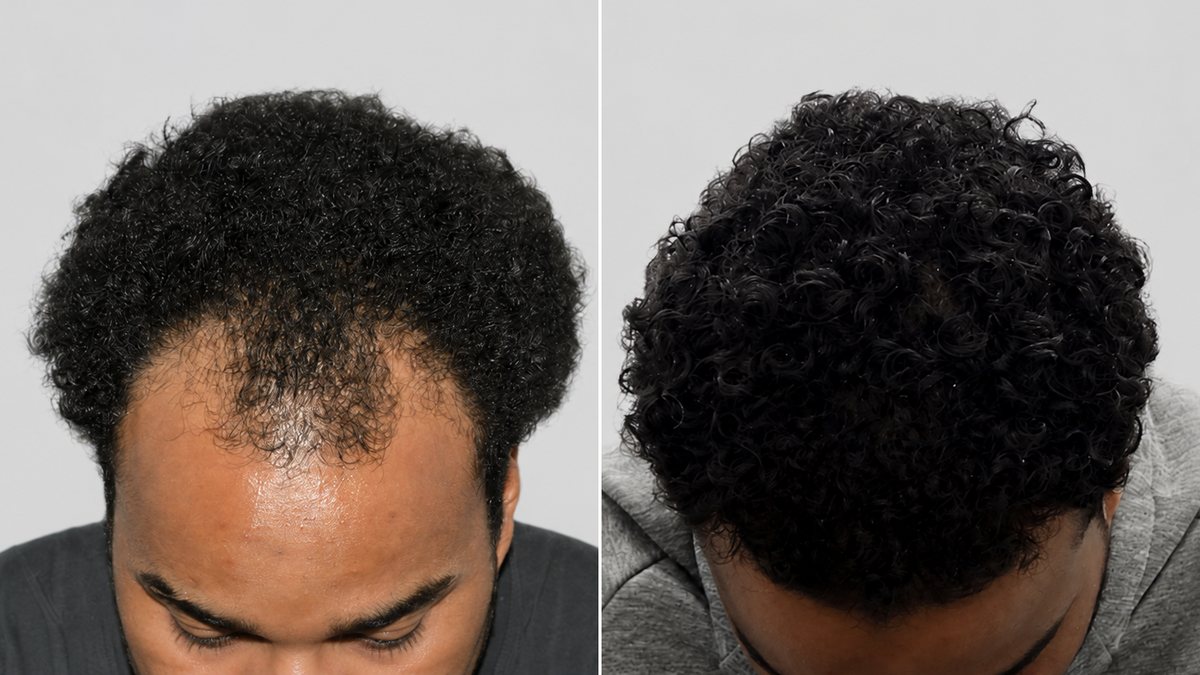
AJ S. · 2,500 Advanced FUE™ grafts
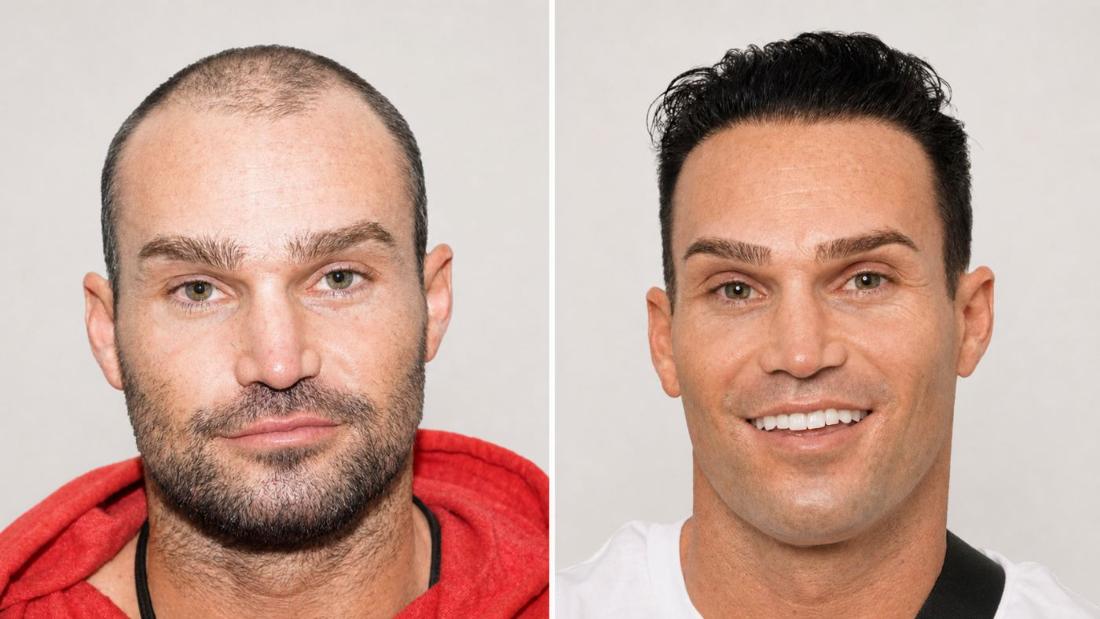
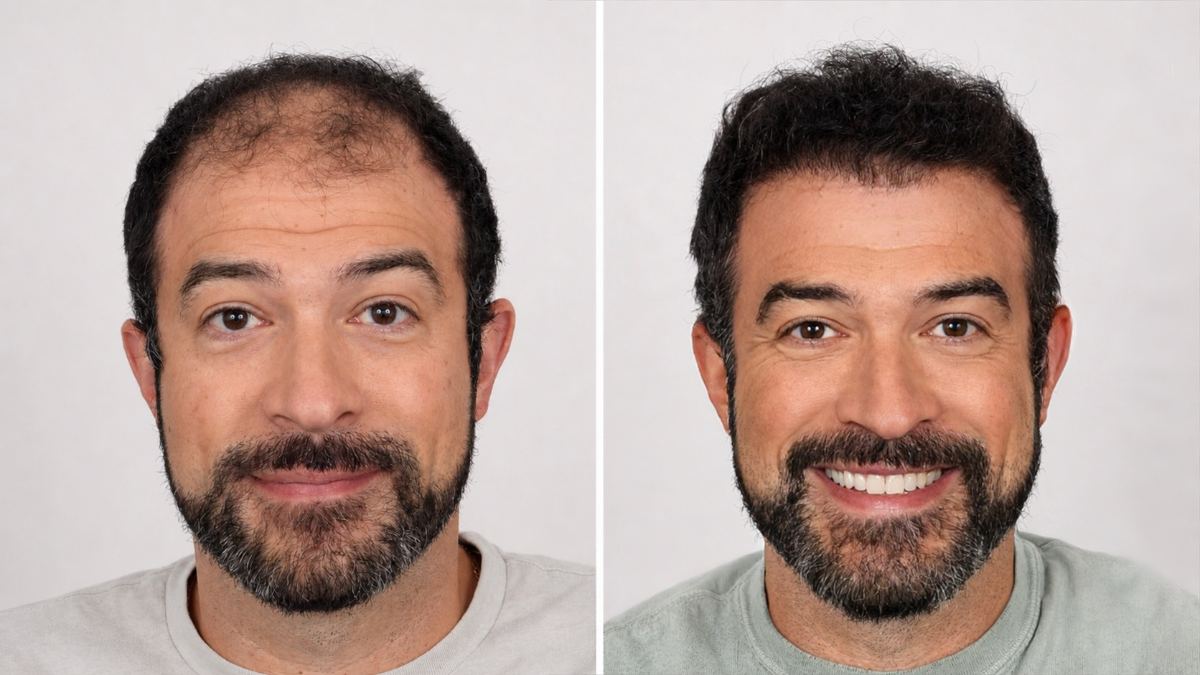
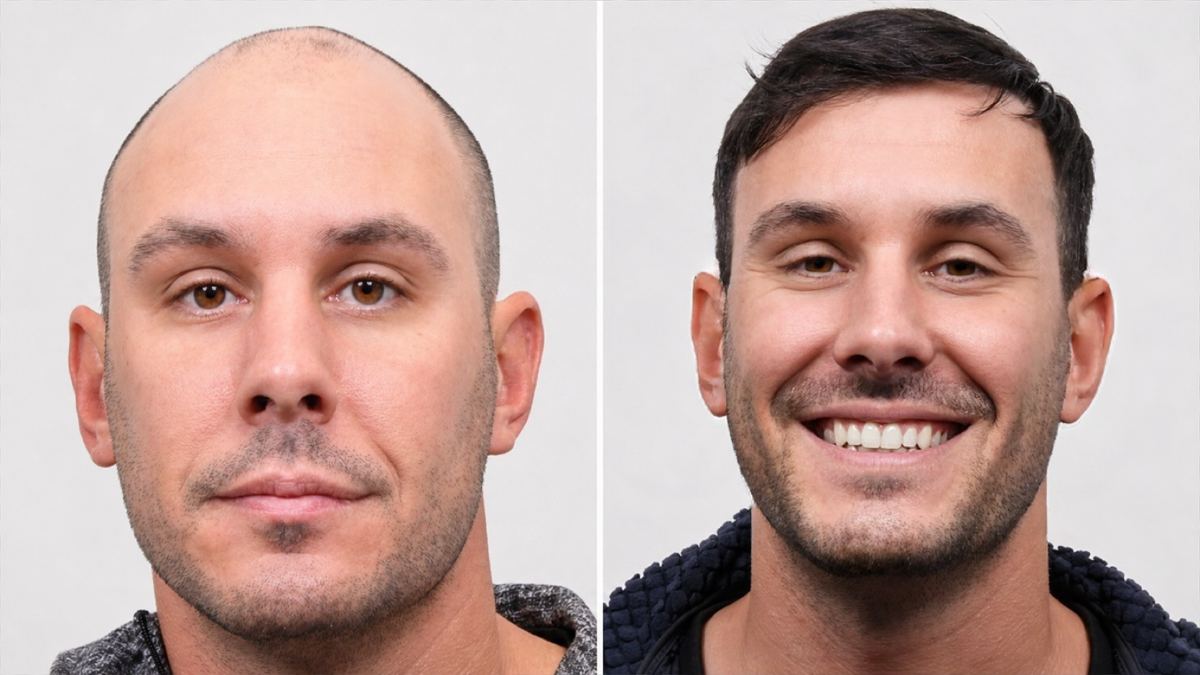
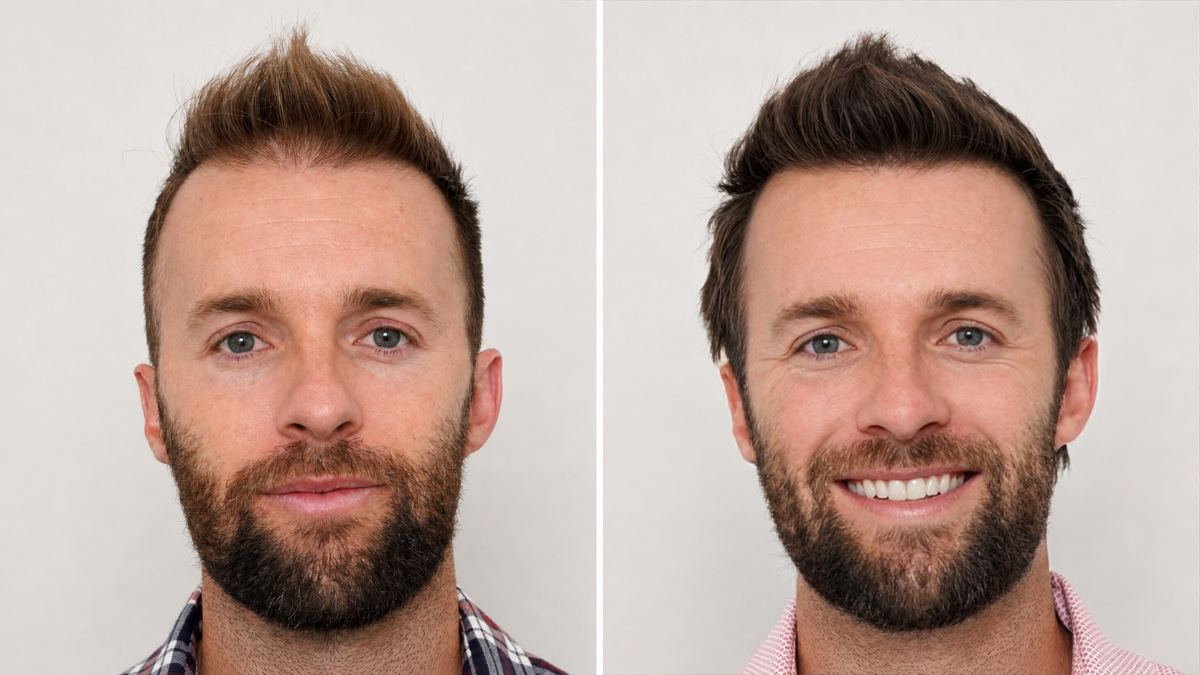
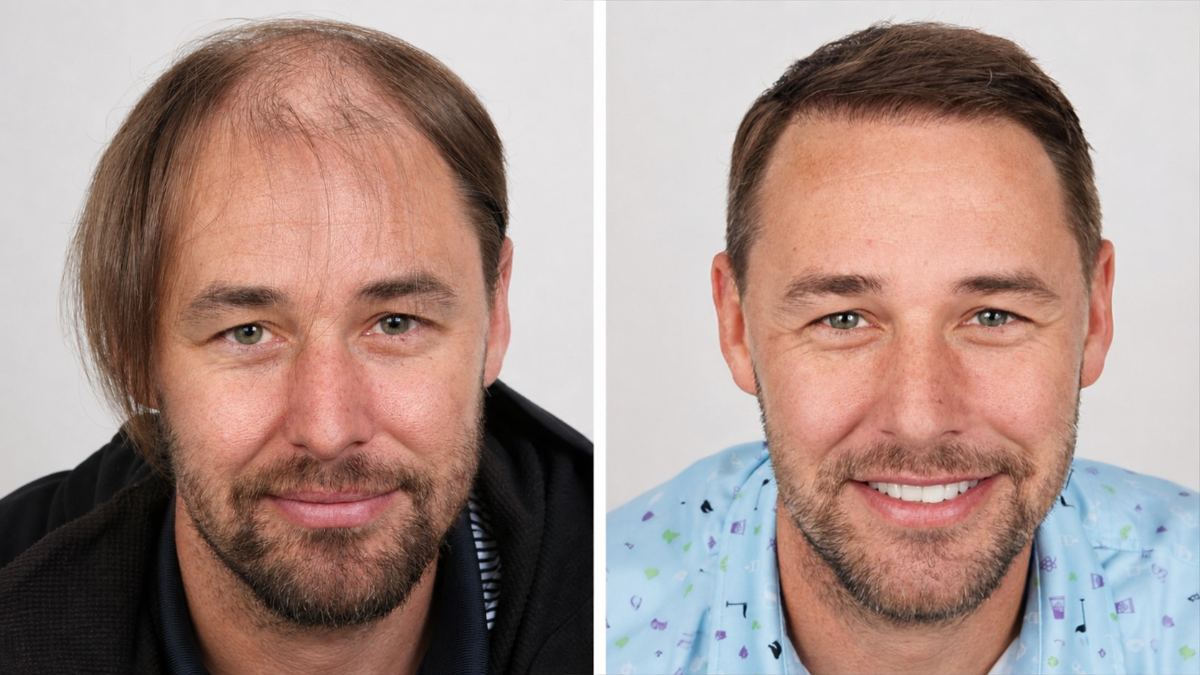
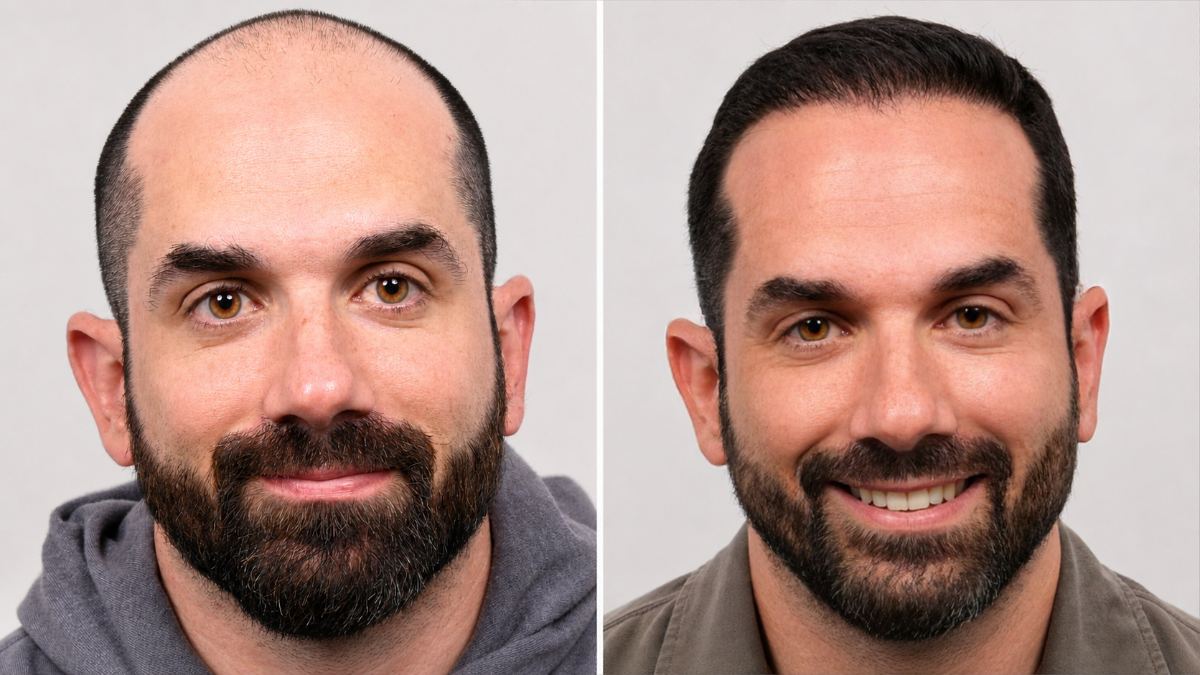
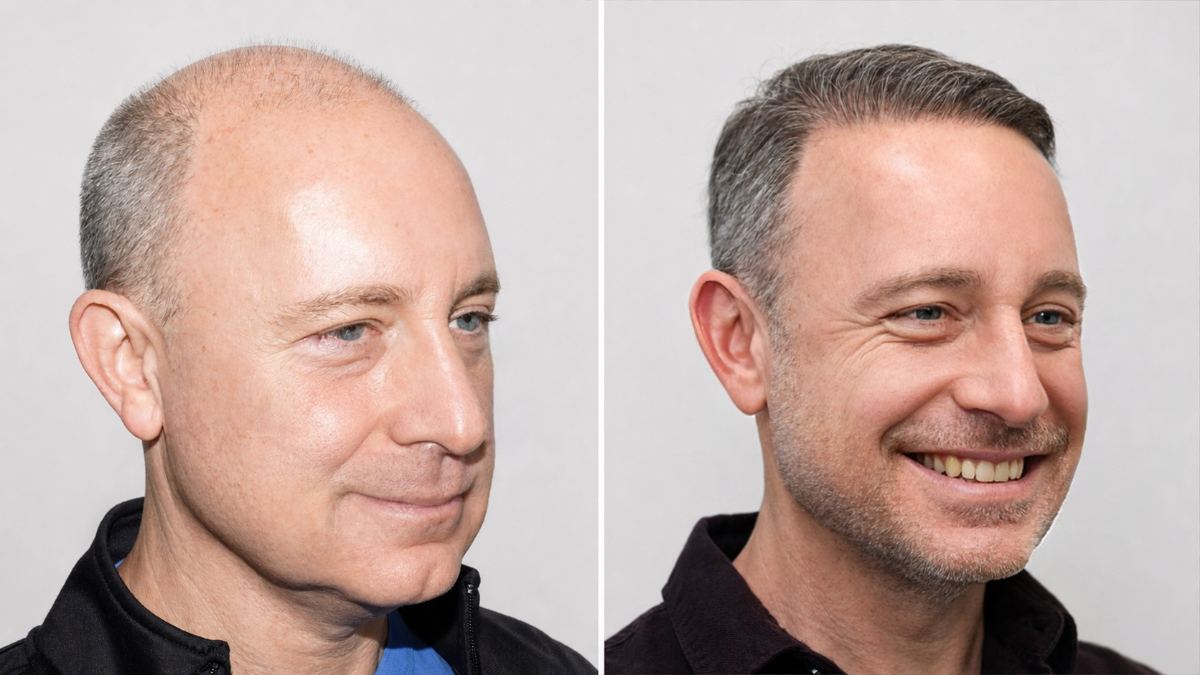
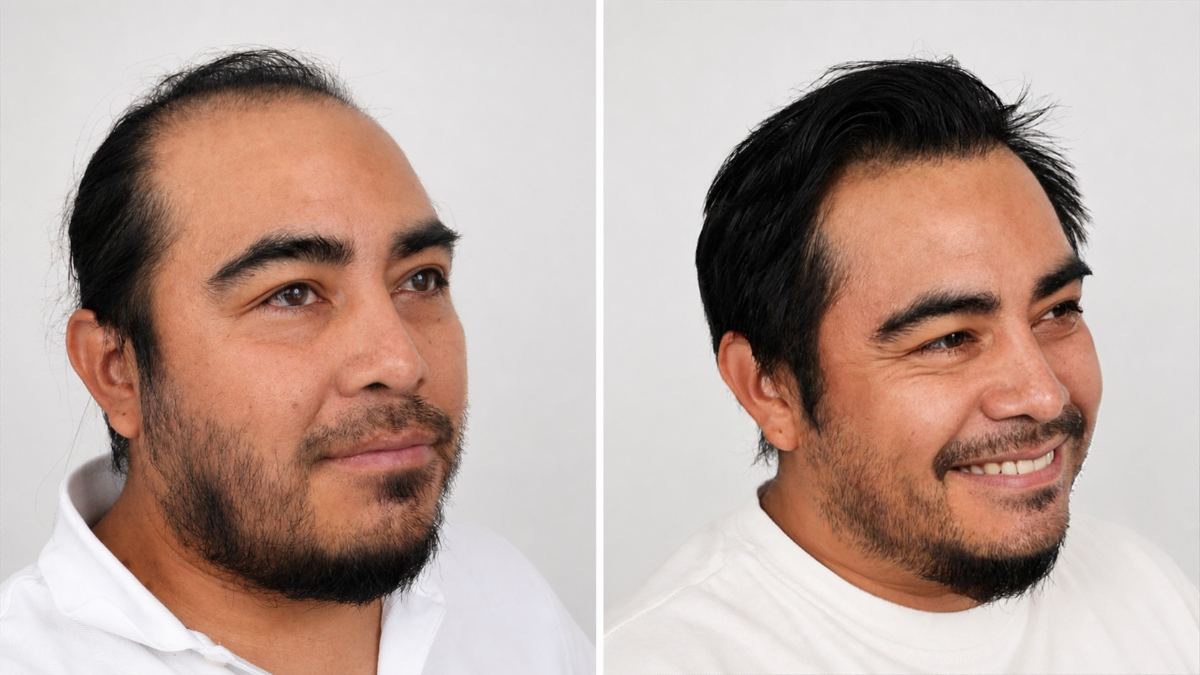
Individual results may vary.
Next step
Ready to see what’s possible for your hairline?
Schedule your free consultation with the experts at Advanced Hair Restoration® today. Consultations are in person, so the physician can examine your scalp and donor area directly and map your exact graft count.